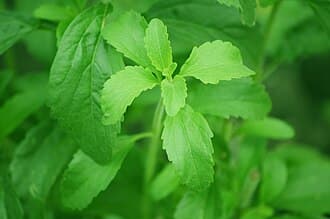
Stevia
Stevia rebaudiana
herbStevia (Sweet Leaf or Sugar Leaf) is a tender perennial native to Paraguay with sweet-tasting leaves used as a natural zero-calorie sugar substitute. Just one fresh leaf chewed gives an intense sweetness 30 to 40 times more concentrated than sugar. Dried and ground stevia leaves can be used in teas, baking, and homemade drinks, and refined stevia extract is the source of the commercial stevia sweetener.
☀️
Sun
full sun
💧
Water
Every 4 days
🌾
Harvest
~90 days
📊
Difficulty
easy
🌱
Lifecycle
tender perennial
Perennial in warm zones; grown as an annual where winters freeze
↔️
Spacing
12-18 in apart
⬇️
Planting Depth
Same depth as nursery for transplants
🧪
Soil pH
6.5-7.5
Growing Details
Soil Type
Average, well-draining
Hardiness Zones
Zones 8 – 12
When to Fertilize
Light feed every 4 to 6 weeks during the growing season
Fertilizer
Balanced 10-10-10 or fish emulsion
🌱 Growing Guide
Start seeds indoors 8 weeks before the last frost or buy transplants. Stevia is a tender perennial in zones 10 to 11 and grown as an annual elsewhere. Plant in full sun on moist well-drained slightly acidic soil with pH 6.5 to 7.5. Space 12 to 18 in apart. Stevia grows 1 to 2 ft tall and equally wide. In cold zones, bring potted plants indoors before first frost; well-tended plants live 3 to 5 years.
Planting Calendar
Sign in to personalize →🌱
Start seeds indoors
Feb 18
🌿
Transplant outdoors
Apr 29
🌾
Projected first harvest
Jul 28
JJan
FFeb
MMar
AApr
MMay
JJun
JJul
AAug
SSep
OOct
NNov
DDec
✅ Plant alongside
Good neighbors that attract beneficial insects or deter pests
- Marigolds: Suppress nematodes in the root zone
- Basil: Shares warm-season conditions
- Lemongrass: Companion herb for sweet teas and infusions
- Mint: Pairs in herbal tea blends
🛡️ Pest & disease prevention
Proactive ways to stop trouble before it starts. Tap a name with an arrow for its full guide
Blast with water, encourage ladybugs
Yellow sticky traps; insecticidal soap if populations build
Iron phosphate bait around young plants
Cover or move indoors when nights drop below 50F
🌾 Harvest & storage
Harvest leaves about 90 days after planting. The best time to harvest is just before flowering when the sweet compounds (steviol glycosides) are most concentrated. Cut whole stems, strip leaves, and dry on a screen for 1 to 2 days; the leaves dry fast and retain sweetness. Grind dried leaves into a green powder for use in baking and beverages, or steep whole dried leaves in tea (a single leaf sweetens a cup). Fresh leaves can also be used directly.
🥗 Nutrition & benefits
Culinary and metabolic value: Stevia leaves contain steviol glycosides (mainly stevioside and rebaudioside A) ; the whole leaf is roughly 30 to 45 times sweeter than sugar and the refined glycosides about 200 to 300 times, yet they contribute no calories and do not raise blood sugar. Stevia has been studied as a sweetener for diabetics and people on low-glycemic diets, and the leaves are approved as a sweetener in many countries.
For educational and informational purposes only. HomeSown is not medical, health, or other professional advice. Always positively identify any plant before handling or eating it; some plants, and some parts of otherwise-edible plants, are toxic. Consult a qualified professional before consuming or otherwise using any plant, especially if you are pregnant, nursing, taking medication, or have a health condition.