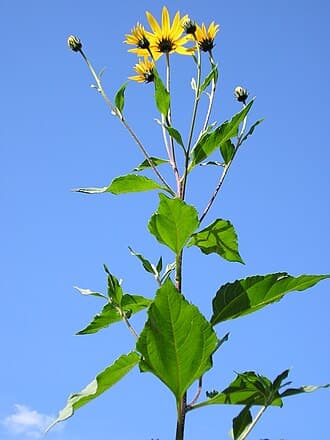
Sunchoke
Helianthus tuberosus
vegetableThe sunchoke, or Jerusalem artichoke, is a tall native sunflower grown for its knobby underground tubers, which have a sweet, nutty, water-chestnut crunch raw and a flavor like artichoke heart when cooked. The vigorous perennial plants reach six feet or more with small yellow blooms, and they are extremely easy to grow, spreading readily from any tuber left in the ground.
☀️
Sun
full sun
💧
Water
Every 3 days
🌾
Harvest
~120 days
📊
Difficulty
easy
🌱
Lifecycle
perennial
Comes back every year
↔️
Spacing
12-18 in. apart
⬇️
Planting Depth
4-6 in.
🧪
Soil pH
5.8-6.8
Growing Details
Soil Type
Average
Hardiness Zones
Zones 3 – 9
When to Fertilize
Little needed; a vigorous grower
Fertilizer
Light balanced if any
🌱 Growing Guide
Plant tubers in spring in full sun and almost any well-drained soil; sunchokes are undemanding and need little care, tolerating poor soil and drought once established. Because even small tuber fragments resprout, the patch spreads aggressively and can be hard to remove, so site it where it can be contained, such as a dedicated bed or a buried container.
Planting Calendar
Sign in to personalize →🌿
Direct sow
Mar 18
🌾
Projected first harvest
Jul 16
JJan
FFeb
MMar
AApr
MMay
JJun
JJul
AAug
SSep
OOct
NNov
DDec
✅ Plant alongside
Good neighbors that attract beneficial insects or deter pests
- Corn: Matches its height so neither is shaded out
- Sunflowers: Similar tall, sturdy habit shares the bed
- Beans: Fix nitrogen and can climb the tall stalks
- Rhubarb: Another permanent-bed crop that tolerates its vigor
❌ Keep away from
Tomato
🛡️ Pest & disease prevention
Proactive ways to stop trouble before it starts. Tap a name with an arrow for its full guide
Spreading and weediness
Plant in a contained bed or barrier and dig thoroughly, since leftover tubers resprout
Trap and hand-pick after dark around young shoots
Rotate and avoid waterlogged ground; remove infected stalks
🌾 Harvest & storage
Dig the tubers in fall after the first frosts, which improve their flavor by converting some of their inulin to sugar; harvest as needed through fall and, where the ground does not freeze solid, into winter and early spring. The tubers have thin skins and do not store long once dug, so leave them in the soil until you need them.
🥗 Nutrition & benefits
Sunchokes are a notable source of iron and potassium and store their carbohydrate as inulin rather than starch, a prebiotic fiber that feeds beneficial gut bacteria and has little effect on blood sugar, though it can cause gas in large amounts.
For educational and informational purposes only. HomeSown is not medical, health, or other professional advice. Always positively identify any plant before handling or eating it; some plants, and some parts of otherwise-edible plants, are toxic. Consult a qualified professional before consuming or otherwise using any plant, especially if you are pregnant, nursing, taking medication, or have a health condition.