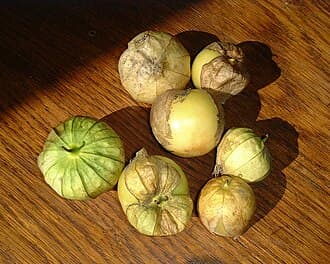
Toma Verde Tomatillo
Physalis philadelphica 'Toma Verde'
vegetableToma Verde is an early, productive tomatillo bearing tart, bright-green fruit wrapped in papery husks, the essential base for salsa verde and green enchilada sauce. The sprawling plants are vigorous and heavy-bearing, ripening fruit in roughly 60 to 80 days, and because tomatillos are largely self-incompatible you must grow at least two plants for them to set fruit.
☀️
Sun
full sun
💧
Water
Every 3 days
🌾
Harvest
~75 days
📊
Difficulty
easy
🌱
Lifecycle
annual
One season, then done
↔️
Spacing
24-36 in. apart
⬇️
Planting Depth
1/4 in.
🧪
Soil pH
6.0-7.0
Growing Details
Soil Type
Rich, well-draining
Hardiness Zones
Zones 3 – 10
Grown as an annual. This range is its winter hardiness, but you can grow it for a single season in any zone.
When to Fertilize
At transplant, then every 3-4 weeks
Fertilizer
Balanced 5-10-10, low nitrogen
🌱 Growing Guide
Start seed indoors 6 to 8 weeks before the last frost and transplant after the soil warms past 60F and nights stay above 55F, spacing the wide, sprawling plants well apart or caging them. Always grow at least two plants so insects can cross-pollinate the flowers, since a lone plant sets little or no fruit. Give full sun and even moisture; tomatillos are more drought-tolerant than tomatoes but fruit best with steady water.
Planting Calendar
Sign in to personalize →🌱
Start seeds indoors
Mar 4
🌿
Transplant outdoors
Apr 29
🌾
Projected first harvest
Jul 13
JJan
FFeb
MMar
AApr
MMay
JJun
JJul
AAug
SSep
OOct
NNov
DDec
✅ Plant alongside
Good neighbors that attract beneficial insects or deter pests
- Peppers: Shares warm-season conditions
- Basil: Repels aphids and thrips
- Sweet Alyssum: Draws hoverflies that eat aphids
- French Marigold: Suppresses root-knot nematodes
❌ Keep away from
Fennel
🛡️ Pest & disease prevention
Proactive ways to stop trouble before it starts. Tap a name with an arrow for its full guide
Handpick adults, larvae, and eggs from the foliage
Encourage ladybugs and hoverflies with flowers; rinse colonies off
Attract parasitic wasps with dill and borage; handpick at dusk
🌾 Harvest & storage
Harvest when the fruit fills out and splits the papery husk and the husk turns from green to tan; ripe fruit often drops to the ground on its own. Pick green tomatillos firm for the brightest tartness, before they yellow and soften, and store them in their husks in the refrigerator for several weeks.
🥗 Nutrition & benefits
Tomatillos are low in calories and provide vitamin C, vitamin K, and potassium, along with unique antioxidant compounds called withanolides that are being studied for their health benefits.
⚠️ Toxicity & safety
Eat the ripe fruit only, with the husk removed. The leaves and very underripe fruit contain solanine-type compounds and should not be eaten.
For educational and informational purposes only. HomeSown is not medical, health, or other professional advice. Always positively identify any plant before handling or eating it; some plants, and some parts of otherwise-edible plants, are toxic. Consult a qualified professional before consuming or otherwise using any plant, especially if you are pregnant, nursing, taking medication, or have a health condition.