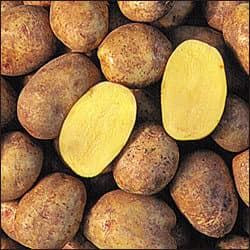
Yukon Gold Potato
Solanum tuberosum 'Yukon Gold'
vegetableYukon Gold is a popular early-to-midseason potato with smooth, thin yellow skin and moist, buttery, golden flesh that is excellent boiled, mashed, or roasted. It sizes up faster than storage russets, in about 75 to 90 days, holds together well when cooked, and yields uniform, good-keeping tubers.
☀️
Sun
full sun
💧
Water
Every 3 days
🌾
Harvest
~90 days
📊
Difficulty
easy
🌱
Lifecycle
annual
One season, then done
↔️
Spacing
12 in. apart
⬇️
Planting Depth
4 in., then hill
🧪
Soil pH
5.0-6.0
Growing Details
Soil Type
Loose, well-draining
Hardiness Zones
Zones 3 – 9
Grown as an annual. This range is its winter hardiness, but you can grow it for a single season in any zone.
When to Fertilize
At planting and again at hilling
Fertilizer
Low-nitrogen, higher potassium (5-10-10)
🌱 Growing Guide
Plant seed-potato pieces, each with one or two eyes, about 3 to 4 inches deep in loose, fertile, slightly acidic soil two to four weeks before the last frost. Hill soil up around the stems as the plants grow to cover the developing tubers and keep them from greening in the light. Give full sun and steady moisture as the tubers form, and avoid fresh manure, which can promote scab.
Planting Calendar
Sign in to personalize →🌿
Direct sow
Apr 1
🌾
Projected first harvest
Jun 30
JJan
FFeb
MMar
AApr
MMay
JJun
JJul
AAug
SSep
OOct
NNov
DDec
✅ Plant alongside
Good neighbors that attract beneficial insects or deter pests
- Bush beans: Repel Colorado potato beetle and add nitrogen
- Horseradish: Traditionally planted at bed corners to deter potato beetle
- Marigold: Deters beetles and nematodes
- Keep away from tomatoes: They share diseases; do not follow one with the other in rotation
❌ Keep away from
TomatoCucumberSquash
🛡️ Pest & disease prevention
Proactive ways to stop trouble before it starts. Tap a name with an arrow for its full guide
Rotate well away from where nightshades grew last year; mulch deeply with straw; hand-pick adults and crush orange egg clusters; row cover before emergence
Row cover seedlings
Hill soil over the tubers and store them in the dark
🌾 Harvest & storage
Harvest new potatoes a couple of weeks after flowering for tender, thin-skinned eating, or wait until the tops die back for fuller-sized tubers with set skins for storage. Dig on a dry day, cure briefly in a dark, airy place, and store cool and dark; Yukon Golds keep well, though not quite as long as russets.
🥗 Nutrition & benefits
Yukon Gold potatoes eaten with the skin supply potassium, vitamin C, vitamin B6, and fiber, and their golden flesh carries a little extra carotenoid pigment; like all potatoes they are naturally fat-free and filling.
⚠️ Toxicity & safety
Eat the tubers, not the green parts. Potato leaves, stems, sprouts, and any green-tinged or sprouting tubers contain solanine and should not be eaten. Store tubers in the dark, and cut away any green or sprouts before cooking.
For educational and informational purposes only. HomeSown is not medical, health, or other professional advice. Always positively identify any plant before handling or eating it; some plants, and some parts of otherwise-edible plants, are toxic. Consult a qualified professional before consuming or otherwise using any plant, especially if you are pregnant, nursing, taking medication, or have a health condition.