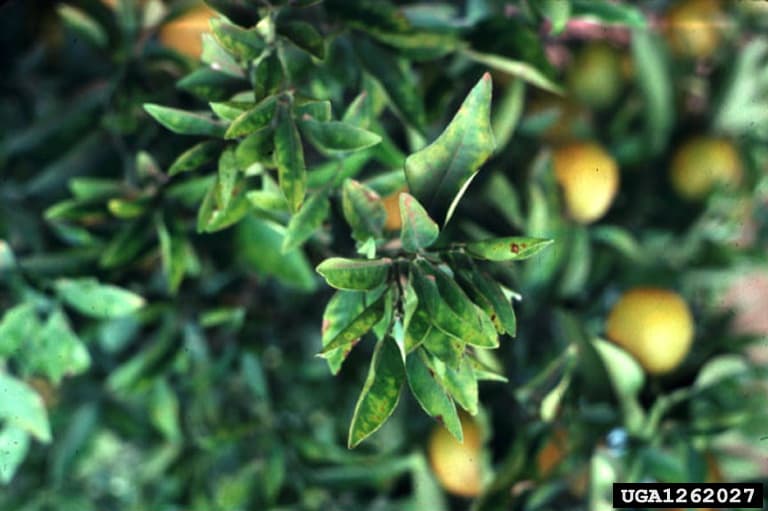
Pierces Disease
Xylella fastidiosa
A deadly bacterial disease of grapevines spread by sap-sucking insects, in which bacteria clog the water-conducting tissue and kill the vine within a year or two. It limits where wine and table grapes can be grown across the warm southern and coastal United States, since infected vines decline far short of their normal lifespan.
🔎 How to spot it
The first clear sign is leaf scorch in mid to late summer: leaf edges and the tissue between veins dry and brown, separated from the still-green parts by a telltale yellow or reddish band, which sets it apart from plain drought scorch. Affected leaves drop while their stalks stay attached to the cane, leaving bare petioles like matchsticks, and canes ripen unevenly with patches of green and brown bark. Fruit clusters wilt and shrivel.
🥀 Damage it causes
The bacteria multiply in the xylem and block the flow of water, so the vine scorches, wilts, and produces small, raisined clusters, then dies back cane by cane. Susceptible varieties usually die within one to two years of showing symptoms, well before a vineyard reaches its expected twenty or more productive years. Whole plantings can be lost where the disease and its insect carriers are active.
🔬 What causes it
Pierces disease is caused by the xylem-dwelling bacterium Xylella fastidiosa, which cannot move on its own and is carried from vine to vine by xylem-feeding insects, chiefly sharpshooters and spittlebugs. The bacterium and its insect carriers thrive in warm climates with mild winters, so the disease is most severe in the South and along the Gulf and is checked by cold winters farther north.
🛡️ Prevent it
In areas where the disease occurs, plant tolerant or resistant grapes such as muscadine and the newer Pierces-disease-resistant hybrids rather than highly susceptible wine grapes. Keep vines away from the riparian and weedy habitats where sharpshooters breed, and control the insect carriers and remove nearby wild grape and host weeds that serve as bacterial reservoirs. Buy clean nursery stock.
🧯 If it is already here
There is no cure once a vine is infected; remove and destroy vines that show clear, repeated scorch and matchstick symptoms, since they will not recover and act as a source for the insects to spread. Management is built on resistant varieties, controlling the sharpshooter carriers, and area-wide removal of infected vines and reservoir plants. Pruning out a single scorched cane rarely saves a vine once the bacteria are established.
💡 Good to know
Pierces disease is the main reason classic wine grapes are hard to grow in the Deep South, where muscadines and resistant hybrids are recommended instead. The yellow band between brown and green leaf tissue, plus the matchstick petioles, separate it from ordinary drought or heat scorch. Because the bacterium needs an insect to move, managing sharpshooters and reservoir plants is central to control.
🌱 Plants it affects
6 plants in the library can be affected by this problem



For educational and informational purposes only. Disease management advice is general guidance drawn from university cooperative extension sources; always identify a problem positively and read and follow the label on any product before use, especially around food crops, children, and pets.