🍂 Diseases & Disorders
The blights, mildews, rots, and rusts that strike a garden, plus the disorders that aren't pests or pathogens at all. How to spot them early, prevent them, and manage them organically, linked to the plants they affect.
Showing 97 of 97 entries

Powdery Mildew
Podosphaera and Erysiphe species
One of the most common and recognizable garden diseases, powdery mildew looks like a dusting of white powder or talc on leaves and stems. It turns up on squash, cucumbers, melons, beans, peas, and many flowers, usually in the second half of summer. Most plants tolerate a light case, but heavy infections weaken the plant and cut the size and quality of the harvest.
🎯 Affects Abelia, Agapanthus, Ageratum, Agrimony & more

Early Blight
Alternaria solani, Alternaria tomatophila
A very common fungal disease of tomato and potato that shows up nearly every season. It starts on the oldest, lowest leaves as brown spots with target-like rings and works its way up the plant, stripping foliage and exposing fruit. A small amount is normal late in the season, but an early, heavy case can sharply reduce yield.
🎯 Affects Tomato, Potato, Pepper, Eggplant

Blossom-End Rot
A common and frustrating disorder, not a disease, in which the bottom of the fruit turns into a sunken brown leathery patch. It strikes tomatoes most often, along with peppers, squash, eggplant, and melons, and is usually worst on the first fruit of the season. It comes from a calcium shortage in the fruit, almost always driven by uneven watering rather than by a lack of calcium in the soil.
🎯 Affects Cucumber, Eggplant, Melon, Pepper & more

Septoria Leaf Spot
Septoria lycopersici
One of the most common leaf diseases of tomato, Septoria leaf spot speckles the lower leaves with small dark-bordered spots after the plant starts setting fruit. It rarely touches the fruit itself, but it can strip a plant of its leaves, cut yield, and expose fruit to sunscald. Wet, humid weather drives it.
🎯 Affects Coneflower, Eggplant, Pepper, Potato & more

Late Blight
Phytophthora infestans
The most destructive disease of tomato and potato, late blight is the water mold that caused the Irish potato famine. It does not appear every year, but when cool, wet weather brings it in it can rot an entire planting in a week or two. Fast scouting and fast removal are the keys to keeping it from spreading.
🎯 Affects Eggplant, Pepper, Potato, Tomatillo & more

Downy Mildew
Pseudoperonospora cubensis and related water molds
A fast-moving water mold disease that blankets the undersides of leaves with gray or purple fuzz while the tops show angular yellow blotches. It hits cucurbits like cucumber, melon, and squash hard, and other forms strike basil, lettuce, spinach, and grapes. In cool, wet, humid weather it can brown out a planting in days.
🎯 Affects Abelia, Agapanthus, Ageratum, Allium & more

Bacterial Leaf Spot
Xanthomonas species
A common warm-weather bacterial disease of tomato and pepper that peppers the leaves and fruit with small dark spots. In wet, humid seasons it spreads fast and can defoliate plants and scar fruit, making it one of the harder garden diseases to control because bacterial diseases have no cure once established.
🎯 Affects Abelia, Agapanthus, Ageratum, Allium & more

Gray Mold
Botrytis cinerea
A common cool, damp-weather mold that turns flowers, fruit, and soft stems into fuzzy gray rot. Botrytis attacks a huge range of plants and is especially troublesome on strawberries, tomatoes, lettuce, beans, and many flowers, both in the garden and after harvest. It thrives wherever air is still, humid, and crowded.
🎯 Affects Abelia, Agapanthus, Ageratum, Agrimony & more
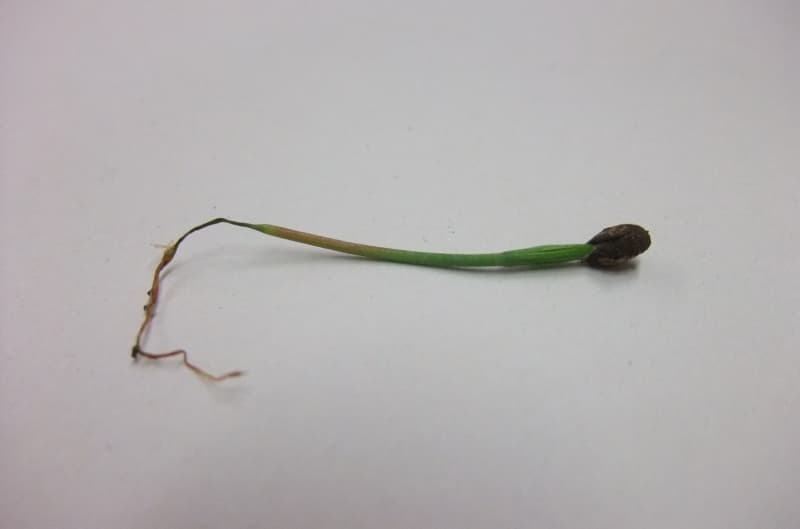
Damping-Off
Pythium, Rhizoctonia, and Fusarium species
The bane of seed starting, damping-off is the sudden collapse and death of seedlings at or just below the soil line. Seeds may rot before they sprout, or healthy-looking seedlings can topple over within a day. It is caused by several soil-dwelling molds and fungi and is driven by cold, wet, overcrowded growing conditions.
🎯 Affects Abelia, Agapanthus, Ageratum, Agrimony & more

Mosaic Virus
Tobacco mosaic virus, Cucumber mosaic virus, and related viruses
A group of plant viruses that mottle leaves with patches of light and dark green and stunt and distort growth. Mosaic viruses hit tomatoes, peppers, cucumbers, squash, and many other crops and flowers. There is no cure, so the whole strategy is keeping the virus out and removing infected plants before it spreads.
🎯 Affects Abelia, Agapanthus, Ageratum, Agrimony & more

Fusarium Wilt
Fusarium oxysporum
A soilborne fungal disease that plugs the water-conducting tissue of a plant from the inside, causing it to yellow, wilt, and die, often one branch or one side at a time. Fusarium wilt is most damaging to tomato but also strikes melon, cucumber, beans, and peas. Once it is in the soil it can persist for years, so resistant varieties are the main defense.
🎯 Affects Abelia, Agapanthus, Ageratum, Allium & more

Verticillium Wilt
Verticillium dahliae
A widespread soilborne fungal wilt that, like Fusarium, clogs the water-conducting tissue of a plant and causes yellowing, wilting, and dieback. Verticillium attacks an enormous range of vegetables, flowers, brambles, and trees, and its resting structures can survive in soil for over a decade, making resistant varieties and rotation essential.
🎯 Affects Abelia, Agapanthus, Ageratum, Agrimony & more

Rust
Uromyces and Puccinia species
A group of fungal diseases that dot leaves and stems with raised, rusty orange, brown, or yellow pustules of powdery spores. Rusts strike beans, garlic and onions, asparagus, corn, and many flowers, and a brush against a badly infected plant leaves an orange smudge. Damp, mild weather and crowded plantings favor them.
🎯 Affects Abelia, Agapanthus, Ageratum, Agrimony & more

Anthracnose
Colletotrichum species
A fungal disease best known for rotting ripe and overripe fruit with sunken, dark, circular lesions, though it also spots leaves and stems on many crops. On tomatoes it is the classic ripe rot, and it also strikes peppers, beans, cucurbits, and brambles. Warm, wet weather and fruit left to over-ripen on the plant make it worse.
🎯 Affects Abelia, Agapanthus, Ageratum, Agrimony & more

Sunscald
A physical disorder, not a disease, in which intense direct sun burns exposed fruit, leaving pale, blistered, leathery patches. Sunscald shows up on tomatoes and peppers, especially when leaf cover is lost to disease, heavy pruning, or pests, and on fruit that develops on small, sparse plants. The damaged tissue then invites secondary rots.
🎯 Affects Apple, Apricot, Aronia, Aspen & more

Black Spot
Diplocarpon rosae
The most common and serious disease of garden roses, black spot peppers the leaves with dark, fringe-edged spots that yellow and drop, often stripping a bush bare by late summer. It weakens the plant and ruins its looks, and it thrives wherever roses stay wet. Resistant varieties and good airflow are the keys to staying ahead of it.
🎯 Affects Rose

Apple Scab
Venturia inaequalis
The most common disease of backyard apples and crabapples, apple scab spots the leaves and corky-scars the fruit, and in wet springs it can defoliate a tree and ruin the crop. It overwinters in fallen leaves, so the disease feeds on its own litter year to year unless the leaves are cleaned up.
🎯 Affects Apple, Aronia, Hawthorn, Pear & more

Fruit Cracking
A common disorder, not a disease, in which tomato fruit splits as it grows, usually after a swing from dry to wet. The cracks open the fruit to rot and make it unsightly, but the underlying cause is uneven watering rather than any pathogen. It also affects other fleshy fruits and roots like cabbage and carrots.
🎯 Affects Apple, Cherry, Fig, Grape & more

Bolting
Bolting is when a leafy or cool-season vegetable suddenly sends up a flower stalk and goes to seed, turning bitter and tough in the process. It is a natural response to heat and lengthening days, not a disease, and it commonly ends the harvest of lettuce, spinach, cilantro, and other cool-weather crops as summer arrives.
🎯 Affects Allium, Arugula, Basil, Beet & more

Fire Blight
Erwinia amylovora
A destructive bacterial disease of apple, pear, and their rose-family relatives that makes shoots look scorched, as if burned. Fire blight can kill blossoms, shoots, and whole limbs in a single season and, in a bad year, take down a young tree. It spreads fast in warm, wet spring weather, and prompt pruning is the main defense.
🎯 Affects Apple, Aronia, Hawthorn, Loquat & more

White Mold
Sclerotinia sclerotiorum
A fungal rot that strikes a wide range of vegetables, coating stems, leaves, and pods with a cottony white mold and rotting them through. White mold thrives in cool, damp, crowded plantings and is especially troublesome on beans, lettuce, cabbage, carrots, and tomatoes. Its hard black resting bodies let it survive in the soil for years.
🎯 Affects Abelia, Agapanthus, Ageratum, Allium & more

Cercospora Leaf Spot
Cercospora species
A common fungal leaf spot that speckles the foliage of beets, Swiss chard, and many other crops with small gray-centered spots ringed in reddish-purple. In warm, humid weather it can spread fast and brown out the leaves, cutting both the look and the yield of leafy and root crops. Wet foliage and crowded plantings feed it.
🎯 Affects Abelia, Agapanthus, Ageratum, Allium & more

Bacterial Wilt
Erwinia tracheiphila
A bacterial disease of cucumbers, melons, and squash that clogs the plant water-conducting tissue and wilts it to death, spread by cucumber beetles. There is no cure once a plant is infected, so the whole battle is keeping the beetles that carry it off the plants. It can wipe out cucumbers and muskmelons especially fast.
🎯 Affects Cantaloupe, Corn, Cucumber, Eggplant & more

Black Rot
Xanthomonas campestris
The most serious bacterial disease of the cabbage family, black rot rots leaves inward from V-shaped yellow wedges at the leaf edge and blackens the veins. It hits cabbage, broccoli, cauliflower, kale, and their kin, and because it rides on seed and spreads in warm, wet weather, it can move fast through a planting. There is no cure once plants are infected.
🎯 Affects Apple, Arugula, Broccoli, Cabbage & more

Peach Leaf Curl
Taphrina deformans
A common fungal disease of peaches and nectarines that puckers and reddens the spring leaves into thick, curled, distorted masses. One of the most recognizable backyard fruit-tree diseases, it weakens the tree and cuts the crop, but it is also one of the easiest to prevent with a single well-timed dormant spray.
🎯 Affects Apricot, Nectarine, Peach

Root Rot
Phytophthora and Pythium species
A group of soilborne water-mold diseases that rot the roots and crown of a plant, usually because the soil stays too wet. Unlike damping-off, which kills seedlings, root and crown rot strikes plants of any age, causing them to wilt, yellow, and decline as their root system dies underground. Poor drainage and overwatering are almost always behind it.
🎯 Affects Abelia, Agapanthus, Ageratum, Agrimony & more

Cedar-Apple Rust
Gymnosporangium juniperi-virginianae
A striking fungal rust that needs two hosts to live: it makes bright orange spots on apple and crabapple leaves and fruit in summer, and bizarre gelatinous orange galls on nearby junipers and red cedars in spring. It is mostly a cosmetic disease on apples, but in a wet spring it can spot fruit and drop leaves on susceptible trees.
🎯 Affects Apple, Aronia, Cedar, Hawthorn & more

Tomato Spotted Wilt Virus
Tomato spotted wilt virus
A damaging plant virus spread by tiny thrips that infects tomatoes, peppers, lettuce, and hundreds of other plants. It stunts and deforms the plant and marks the leaves and fruit with rings and bronzed, dead patches. There is no cure, so control means managing the thrips that carry it and removing infected plants fast.
🎯 Affects Abelia, Agapanthus, Ageratum, Allium & more

Southern Blight
Sclerotium rolfsii
A warm-climate fungal disease that rots plants at the soil line and wilts them suddenly, leaving a fan of white mold and seed-like tan sclerotia at the base. Southern blight hits a huge range of vegetables in hot, humid weather and can kill a healthy plant within days once it girdles the stem.
🎯 Affects Abelia, Agapanthus, Ageratum, Agrimony & more

Corn Smut
Ustilago maydis
A fungal disease of corn that swells kernels and other plant parts into bizarre tumor-like galls filled with sooty black spores. It is the most widespread disease of sweet corn, more startling than serious in a home garden, and the young galls are even eaten as a delicacy called huitlacoche.
🎯 Affects Corn

Brown Rot
Monilinia fructicola
The most serious disease of stone fruit, brown rot blights spring blossoms and twigs and then rots the ripening fruit, sometimes turning a sound peach to mush within a day. It hits peaches, nectarines, plums, cherries, and apricots, and in warm, wet weather it can destroy much of a backyard crop on the tree and in storage.
🎯 Affects Apple, Apricot, Cherry, Chokecherry & more

Alternaria Leaf Spot
Alternaria species
A common fungal leaf spot of the cabbage family that rings the leaves with brown target-like spots and can rot into the heads of broccoli and cauliflower. It shows up on cabbage, kale, broccoli, and their kin, especially in warm, wet weather, downgrading the harvest and sometimes spoiling the part you eat.
🎯 Affects Abelia, Agapanthus, Ageratum, Allium & more

Tip Burn
A physiological disorder, not a disease, in which the leaf tips and margins of lettuce, cabbage, and other leafy crops turn brown and die. It comes from a calcium shortage in the fast-growing inner leaves, usually driven by uneven water and rapid growth rather than by low soil calcium, and it often hides in the center of a head until you cut it open.
🎯 Affects Arugula, Cabbage, Chard, Chicory & more

Catfacing
A physiological disorder, not a disease, in which tomato fruit grows scarred, puckered, and misshapen at the blossom end, with holes, ridges, and bands of brown scar tissue. It traces back to something disrupting flower formation, usually cold weather at bloom, and is most common on big heirloom beefsteak types early in the season.
🎯 Affects Pepper, Strawberry, Tomato

Crown Gall
Agrobacterium tumefaciens
A bacterial disease that causes rough, tumor-like galls on the roots, crown, and lower stems of a huge range of plants, from fruit trees and brambles to roses and grapes. The galls disrupt the flow of water and nutrients, stunting and weakening the plant, and the bacteria can persist in the soil for years once established.
🎯 Affects Alder, Apple, Apricot, Aronia & more
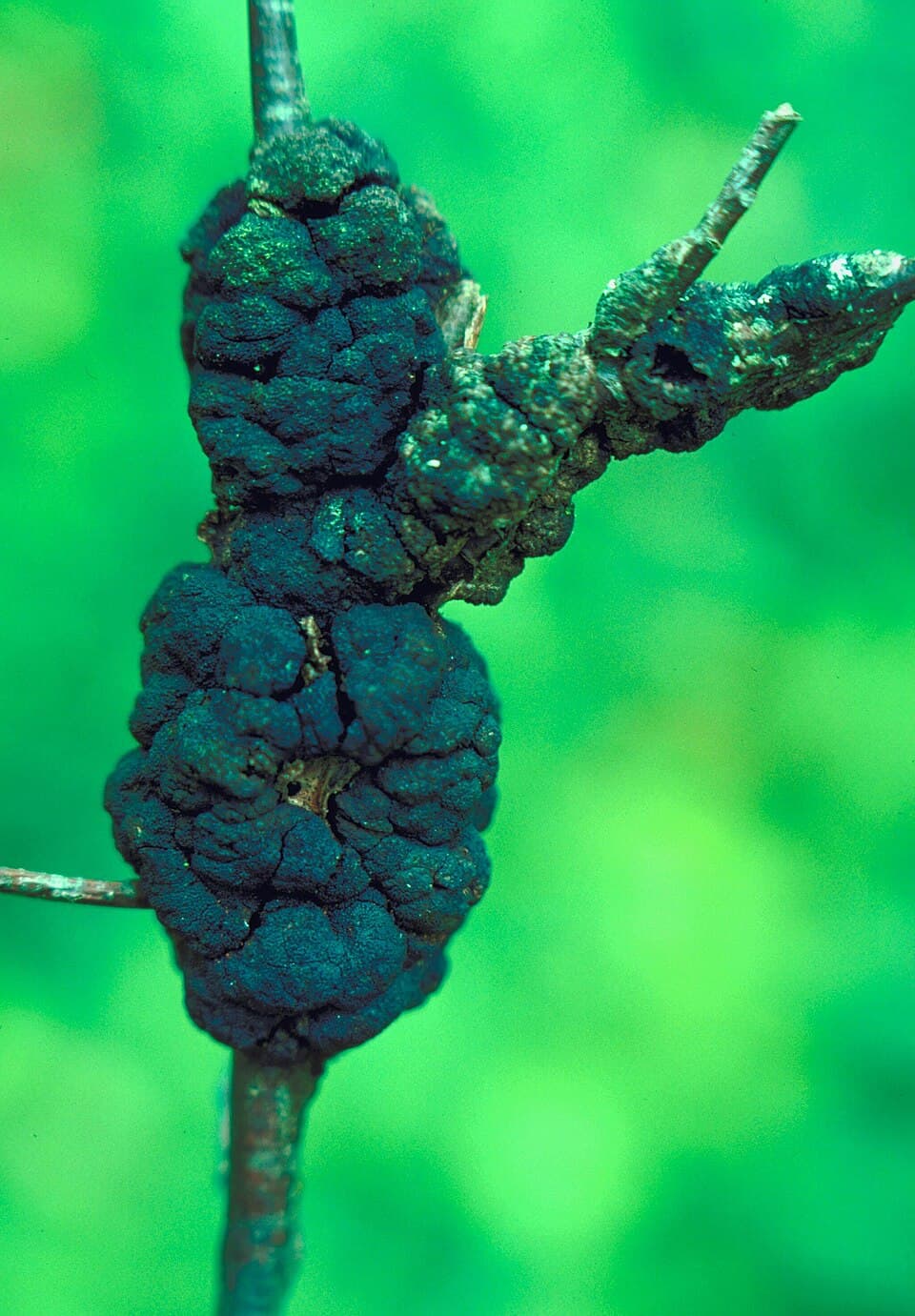
Black Knot
Apiosporina morbosa
A fungal disease of plum and cherry trees that grows hard, black, warty swellings along the twigs and branches, like lumps of coal stuck on the wood. Common on backyard and wild plums and cherries, black knot spreads year to year, killing twigs and limbs and, if left alone, eventually whole trees.
🎯 Affects Apricot, Cherry, Chokecherry, Plum

Bacterial Speck
Pseudomonas syringae pv. tomato
A bacterial disease of tomato that flecks the leaves and fruit with tiny dark specks, favored by cool, wet weather. It rarely kills a plant, but a heavy case spots the foliage and dots the fruit with small raised black specks that downgrade it. Like other bacterial diseases it has no cure once it starts and rides in on seed.
🎯 Affects Tomato

Angular Leaf Spot
Pseudomonas syringae pv. lachrymans
A bacterial disease of cucumbers and other vine crops that cuts small, angular, vein-bounded spots into the leaves, which dry and drop out to leave a shot-hole, tattered look. Spread by splashing water in warm, wet weather, it also spots the fruit and rides in on seed, and it is most troublesome on cucumber and melon.
🎯 Affects Bean, Cantaloupe, Cucumber, Melon & more

Cherry Leaf Spot
Blumeriella jaapii
A common fungal disease of cherry, especially tart cherries, that spots the leaves and triggers heavy yellowing and leaf drop by midsummer. Defoliation weakens the tree and leaves fruit pale and low in sugar, and repeated bad years can sap a tree winter hardiness. It overwinters in fallen leaves, so cleanup is central to control.
🎯 Affects Cherry, Chokecherry

Clubroot
Plasmodiophora brassicae
A serious soilborne disease of the cabbage family caused by a microscopic protist, not a fungus, that swells the roots into distorted clubs and stunts the plant above. Clubroot is hard to get rid of because its resting spores survive in the soil for many years, and it is worst in acidic, wet ground.
🎯 Affects Arugula, Broccoli, Cabbage, Cauliflower & more

Common Scab
Streptomyces scabies
A soilborne disease that roughens the skin of potatoes and other root crops with corky, scabby lesions. Caused by a soil bacterium, common scab is mostly cosmetic, the tubers are fine to eat once peeled, but it downgrades the crop and is notoriously hard to control, favored by dry soil and high pH.
🎯 Affects Beet, Carrot, Parsnip, Potato & more

Strawberry Leaf Scorch
Diplocarpon earlianum
A common fungal disease of strawberries that covers the leaves in dark purple spots and, in a heavy case, gives the whole leaf a dried, scorched, burnt look. It weakens the planting and cuts berry yield and quality, and it overwinters on old strawberry leaves, so end-of-season cleanup is key.
🎯 Affects Strawberry

Gummy Stem Blight
Stagonosporopsis species
A fungal disease of cucurbits that blights leaves and stems and then rots the fruit, oozing gummy amber droplets from cankers on the vines. Known as gummy stem blight on the foliage and black rot on the fruit, it hits melons, cucumbers, squash, and pumpkins, especially in warm, wet weather, and rides in on seed.
🎯 Affects Cantaloupe, Cucumber, Melon, Pumpkin & more

Aster Yellows
Candidatus Phytoplasma asteris
A disease caused by a phytoplasma, a tiny bacteria-like organism, that is spread by leafhoppers and twists plants into yellowed, stunted, weirdly deformed growth. Aster yellows hits a very wide range of vegetables and flowers, including carrots, lettuce, and many ornamentals, and there is no cure, so control means managing leafhoppers and pulling infected plants.
🎯 Affects Abelia, Agapanthus, Ageratum, Allium & more

Rose Rosette Disease
Rose rosette virus
A deadly viral disease of roses, spread by a tiny wind-blown mite, that throws out clusters of distorted red shoots, excessive thorns, and witches-broom growth before killing the plant. It has spread widely across much of the country and has no cure, so prompt removal of infected roses and control of the mite are the only options.
🎯 Affects Rose

Nutrient Deficiency
A physiological disorder, not a disease, in which a plant runs short of an essential mineral nutrient and shows it in the leaves, usually as yellowing (chlorosis), discoloration, or stunting. Nutrient problems are among the most common things gardeners misread as disease, and the pattern, which leaves and where the yellowing falls, points to which nutrient is short.
🎯 Affects Abelia, Agapanthus, Ageratum, Agrimony & more

Frost & Cold Injury
Physical damage to plants from freezing or near-freezing temperatures, when ice forms in or around the plant tissue and ruptures the cells. Frost injury is a top cause of lost transplants and ruined harvests at the cold ends of the season, but it often looks worse than it is, and many plants recover from a light frost.
🎯 Affects Abelia, Agapanthus, Ageratum, Agrimony & more

Sooty Mold
Capnodium and related fungi
A black, soot-like coating that grows on leaves, stems, and fruit wherever honeydew, the sticky waste of sap-sucking insects, has rained down. Sooty mold does not infect the plant; it grows on the honeydew, but a heavy black film blocks light and can weaken the plant. It is a sign that aphids, scale, whiteflies, or another honeydew maker are at work above.
🎯 Affects Abelia, Agapanthus, Ageratum, Agrimony & more

Bacterial Soft Rot
Pectobacterium and Dickeya species
A bacterial disease that turns the fleshy parts of plants into a soft, wet, foul-smelling mush, in the garden and especially in storage. Bacterial soft rot hits a huge range of crops, potatoes, carrots, onions, cabbage, cucurbits, peppers, and more, and rots the rhizomes and corms of ornamentals such as calla lily, iris, and gladiolus. It enters through wounds and spreads fast in warm, wet conditions, and there is no cure once it starts.
🎯 Affects Amaranth, Artichoke, Arugula, Asparagus & more
Herbicide Injury
Damage to garden plants from weed killers that drift in on the wind, vaporize from a neighbor lawn or field, or linger in mulch, manure, or compost. Tomatoes, peppers, beans, and grapes are especially sensitive, and growth-regulator herbicides like 2,4-D and dicamba cause the classic twisted, distorted growth that is often mistaken for a disease.
🎯 Affects Abelia, Agapanthus, Ageratum, Agrimony & more

White Rot
Sclerotium cepivorum
A devastating soilborne fungal disease of onions, garlic, and other alliums that rots the roots and base of the bulb. White rot is feared because its tiny resting structures survive in the soil for decades, so once a garden bed is infested it is extremely hard to grow alliums there again.
🎯 Affects Allium, Chives, Garlic, Leek & more
Bulb Rot
Fusarium, Penicillium, and Botrytis species
A general rotting of flower bulbs, corms, and onion bulbs caused by several soil and storage fungi that turn the bulb soft, moldy, or mushy. Bulb rot strikes both in waterlogged ground and in storage, and it is one of the main reasons planted bulbs fail to come up or stored bulbs collapse before planting.
🎯 Affects Allium, Canna, Chives, Crocosmia & more
Forking
A physiological disorder, not a disease, in which the taproot of a carrot or other root crop splits into two or more twisted, branched, or hairy roots instead of growing into one straight root. Forking does not hurt eating quality but it ruins the look of the crop and makes roots hard to clean and prepare.
🎯 Affects Beet, Burdock, Carrot, Celeriac & more
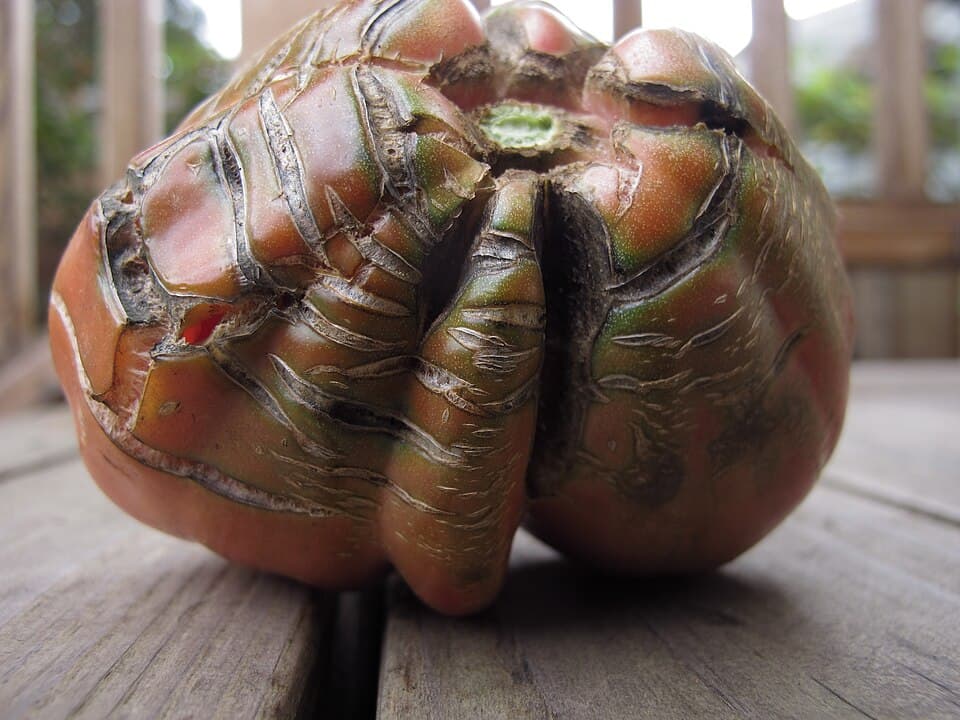
Cracking & Splitting
A physiological disorder in which fruits, heads, or roots crack or split open because the plant takes up water faster than its skin can stretch. It is most familiar in tomatoes that split after a heavy rain, but cabbage heads, carrots, and many fruits do the same thing, and the open cracks then invite rot and insects.
🎯 Affects Apple, Beet, Cabbage, Carrot & more
Blossom Drop
A physiological disorder in which a plant sheds its flowers without setting fruit, most often because of temperature stress. It frustrates gardeners growing tomatoes and peppers in hot summers or cold spells, when the plants bloom heavily but the blossoms simply fall off and no fruit forms.
🎯 Affects Bean, Cantaloupe, Cucumber, Edamame & more

Bottom Rot
Rhizoctonia solani
A soilborne fungal disease of lettuce that rots the lower leaves and the base of the head where they touch the ground. Bottom rot is most damaging as lettuce nears maturity, when the fungus spreads from the soil into the wrapper leaves and can collapse the whole head, often just before harvest.
🎯 Affects Arugula, Cabbage, Chard, Chicory & more

Botrytis Neck Rot
Botrytis allii
A fungal storage rot of onions, and sometimes shallots and garlic, that enters through the neck of the bulb at harvest and rots it from the top down weeks later in storage. Botrytis neck rot is one of the most important causes of onion losses after harvest, often appearing only once the crop is in storage.
🎯 Affects Allium, Chives, Garlic, Leek & more
Corm Rot
Fusarium oxysporum f. sp. gladioli
A soilborne fungal disease of gladiolus and related corm flowers that rots the corm in the ground and in storage, while yellowing and stunting the plant above. Fusarium corm rot is the most common and serious disease of gladiolus, and because it lingers in the soil and on infected corms it is easily carried from year to year.
🎯 Affects Canna, Crocosmia, Crocus, Gladiolus & more

Citrus Greening (HLB)
Candidatus Liberibacter species
A fatal bacterial disease of citrus, spread by a tiny insect, that turns leaves blotchy yellow, makes fruit small, green, and bitter, and eventually kills the tree. Citrus greening, or huanglongbing, is the most serious citrus disease in the world and has devastated citrus in Florida and elsewhere; there is no cure.
🎯 Affects Calamondin, Grapefruit, Kumquat, Lemon & more

Fusarium Basal Rot
Fusarium oxysporum f. sp. cepae
A soilborne fungal disease of onions, garlic, and other alliums that rots the basal plate at the bottom of the bulb. Fusarium basal rot is found worldwide and often shows up late, with the rot developing as bulbs near maturity and especially during storage, after the crop looked healthy in the field.
🎯 Affects Allium, Chives, Garlic, Leek & more
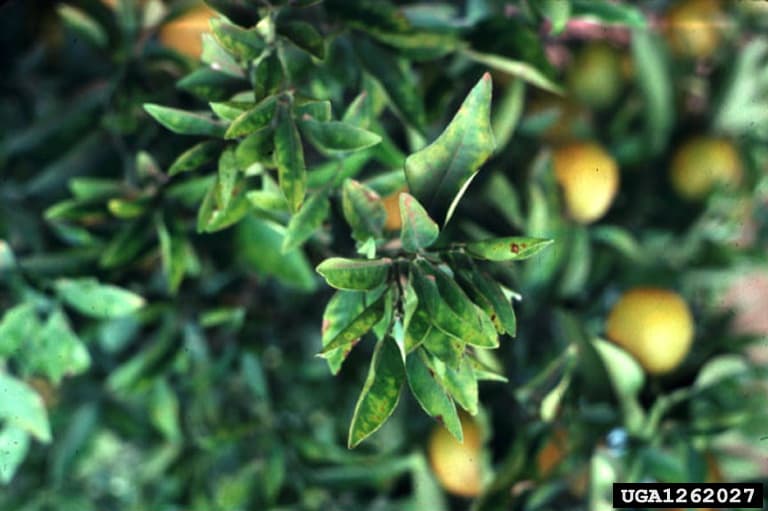
Pierces Disease
Xylella fastidiosa
A deadly bacterial disease of grapevines spread by sap-sucking insects, in which bacteria clog the water-conducting tissue and kill the vine within a year or two. It limits where wine and table grapes can be grown across the warm southern and coastal United States, since infected vines decline far short of their normal lifespan.
🎯 Affects Grape, Muscadine Grape

Dutch Elm Disease
Ophiostoma novo-ulmi
A lethal fungal wilt of elm trees, spread by bark beetles and through connected roots, that has killed tens of millions of American elms and reshaped streets and forests across the country. The fungus plugs the water-conducting vessels, so infected trees wilt and die, often within a single season for a susceptible elm.
🎯 Affects American Elm, Elm, Slippery Elm

Bacterial Canker
Pseudomonas syringae
A bacterial disease of cherries, peaches, apricots, plums, and other stone fruit that forms oozing cankers on the trunk and limbs and blasts blossoms, buds, and shoots in spring. It is worst on young, stressed trees in cool, wet springs and can girdle and kill whole limbs or young trees.
🎯 Affects Cherry, Peach, Apricot, Plum & more

Chocolate Spot
Botrytis fabae
A fungal leaf disease of fava and broad beans that peppers the foliage with reddish-brown spots, and in wet, crowded conditions blackens whole plants and slashes the crop. It is the most damaging disease of fava beans in cool to mild, humid climates and flares around flowering.
🎯 Affects Fava Bean, Broad Bean

Bitter Pit
Calcium-related physiological disorder
A common physiological disorder of apples, not caused by any germ, in which small sunken brown spots of dead, corky flesh form on and just under the skin. It is tied to a shortage of calcium in the fruit and is especially troublesome on prone varieties such as Honeycrisp, showing up late on the tree or after weeks in storage.
🎯 Affects Apple
Cavity Spot
Pythium violae and related species
A soilborne disease of carrots, caused by water-mold fungi, that pits the roots with small sunken lesions and makes them unsellable. The spots usually appear as the crop nears maturity and are worst in cool, wet, poorly drained soil, so a fine-looking carrot crop can be marred just before harvest.
🎯 Affects Carrot

Pink Root
Setophoma terrestris
A soilborne fungal disease of onions and other alliums that turns the roots pink to red and then kills them, so plants are starved, stunted, and yield small bulbs. The fungus persists in the soil for years and is most damaging where alliums are grown on the same ground repeatedly.
🎯 Affects Onion, Shallot, Garlic, Leek

Pineapple Heart Rot
Phytophthora nicotianae and Phytophthora cinnamomi
A water-mold disease of pineapple that rots the central growing point and the roots, causing the heart leaves to collapse and the whole plant to decline. It is the most serious disease of pineapple in wet, poorly drained ground, and it can rot suckers and newly set plants before they establish.
🎯 Affects Pineapple
Clematis Wilt
Calophoma clematidina
A fungal disease of clematis, mostly the large-flowered hybrids, that causes shoots to wilt and collapse suddenly, often just as the plant is about to flower. The wilt can be alarming because a healthy-looking vine blackens and dies back to the ground in a few days, though the roots usually survive and resprout.
🎯 Affects Clematis

Laurel Wilt
Harringtonia lauricola
A fast-killing fungal wilt of trees and shrubs in the laurel family, carried by an invasive wood-boring beetle. The fungus plugs the water-conducting tissue, so an infected tree wilts and dies within weeks to months, and it has devastated wild redbay and threatens avocado, sassafras, bay, and related plants across the Southeast.
🎯 Affects Avocado, Laurel, Sassafras

Boron Deficiency
A nutritional disorder, not a disease, in which a plant runs short of boron and shows it as dead growing points and dark, corky, cracked tissue inside its fleshy roots and stems. Boron is needed only in tiny amounts, but the margin is narrow, and beets, turnips, and cole crops like cauliflower, broccoli, and celery are the classic crops to show a shortage first.
🎯 Affects Apple, Arugula, Beet, Broccoli & more
Hollow Heart
A physiological disorder, not a disease, in which a hollow cavity opens in the center of a fleshy root or tuber when it grows in uneven spurts. It is most familiar in potatoes but shows up in other fast-swelling crops such as celeriac and large radishes. The cavity is clean and sterile -- the plant simply outgrew its own center -- so it is a quality problem, not a rot.
🎯 Affects Beet, Burdock, Carrot, Celeriac & more
Woody Roots
A textural disorder, not a disease, in which the eating part of a root crop turns tough, fibrous, and woody instead of crisp and tender, often spongy or pithy inside and sharply hot or bitter in flavor. It is the classic fate of radishes and beets that grow too slowly, sit in the ground too long, or push through hot, dry weather.
🎯 Affects Beet, Burdock, Carrot, Celeriac & more

Thousand Cankers Disease
Geosmithia morbida
A lethal disease of walnut caused by a fungus that is carried from tree to tree by the tiny walnut twig beetle. Each beetle that tunnels in starts a small canker, and as thousands of beetles attack, the cankers merge and girdle the branches, killing the tree within a few years. Black walnut is highly susceptible.
🎯 Affects Butternut, Heartnut, Walnut

Beech Bark Disease
Neonectria faginata (with beech scale Cryptococcus fagisuga)
A slow, disfiguring, and often fatal disease of beech that takes two organisms acting in sequence: a tiny sap-sucking scale insect first weakens the bark, then a Neonectria fungus invades the feeding wounds and kills patches of bark. Affected trees develop oozing cankers, decline over years, and can snap off in wind.
🎯 Affects Beech

Beech Leaf Disease
Litylenchus crenatae subsp. mccannii
A fast-moving, often fatal disease of beech caused by a microscopic leaf-feeding nematode that lives in the buds and leaves. It produces dark bands between the leaf veins, then leathery, shrunken leaves, bud loss, and a thinning canopy. Young trees can die within a few years, and there is no easy cure.
🎯 Affects Beech

Black Sigatoka
Pseudocercospora fijiensis
The most damaging leaf disease of banana worldwide, also called black leaf streak. A fungus attacks the youngest leaves and turns them into blackened, dying tissue, robbing the plant of the leaf area it needs to fill out a bunch. It causes premature ripening and small, poor-quality fruit, but a backyard grower with good practices can usually keep it in check.
🎯 Affects Banana

Entomosporium Leaf Spot
Entomosporium mespili
The most common leaf disease of Indian hawthorn, and a frequent problem on red tip photinia, caused by a fungus that spots and drops the leaves. It shows as many small red spots that merge into blotches, and in wet springs and falls it can defoliate a shrub and weaken it over several seasons.
🎯 Affects Apple, Aronia, Hawthorn, Loquat & more

Peacock Spot
Venturia oleaginea
A common fungal leaf disease of olive, also called olive leaf spot or bird eye spot, named for the muddy, ringed spots it makes on the leaves. Cool, wet weather drives it, and bad cases cause heavy leaf drop from the lower canopy, weak bloom, and reduced fruit set.
🎯 Affects Olive

Papaya Ringspot Virus
Papaya ringspot virus
The most serious disease of papaya worldwide, a virus that stunts the plant, mottles and distorts the leaves, and marks the fruit with ring-shaped spots. It is carried by aphids and has no cure, so control depends on removing infected plants fast and keeping the virus away from healthy ones.
🎯 Affects Cantaloupe, Cucumber, Melon, Papaya & more

Dragon Fruit Canker
Neoscytalidium dimidiatum
The most damaging disease of dragon fruit (pitaya) in warm, humid regions, a fungus that scars the fleshy stems (cladodes) and fruit with spreading sunken cankers. It is mostly cosmetic on the plant at first, but it can ruin fruit for market and weaken heavily infected stems.
🎯 Affects Dragon Fruit
Dragon Fruit Stem & Fruit Rot
Bipolaris cactivora; Enterobacter cloacae
A soft, wet rot of dragon fruit stems and fruit caused mainly by the fungus Bipolaris cactivora, and sometimes by soft-rot bacteria. Unlike the firm, dry scars of stem canker, this disease collapses tissue into a mushy rot and is a frequent cause of post-harvest fruit loss.
🎯 Affects Dragon Fruit
Tulip Fire
Botrytis tulipae
A destructive fungal blight of tulips, named for the scorched, fire-burnt look it gives leaves and flowers. A close relative of gray mold but specific to tulips, it can wreck a planting in a wet spring and leaves the soil contaminated for years.
🎯 Affects Tulip, Lily

Collar Rot
Phytophthora species
A rot of the trunk base and crown at or just below the soil line, usually caused by Phytophthora water molds in wet, poorly drained ground. It girdles the tree from the bottom, choking off the flow of water and nutrients, and is a common cause of slow decline and sudden death in fruit trees and many woody plants.
🎯 Affects Apple, Apricot, Aronia, Atemoya & more

Butternut Canker
Ophiognomonia clavigignenti-juglandacearum
A lethal, introduced fungal disease that has devastated butternut (white walnut) across its range. It kills trees from the bark inward, forming sunken, oozing cankers that multiply and girdle branches and trunk, and there is little natural resistance.
🎯 Affects Butternut
Shab Disease
Phomopsis lavandulae
The most serious disease of lavender, a fungus that makes shoots wilt and die back and can kill an established plant. It often lurks unseen for a long time, then suddenly collapses shoots across the plant, and there is no chemical cure.
🎯 Affects Lavender

Charcoal Rot
Macrophomina phaseolina
A hot-weather, soilborne rot caused by a fungus with an enormous host range, named for the sooty, charcoal-like dusting of tiny black survival bodies it leaves in rotted tissue. It is a stress disease that strikes hardest when plants are hot and drought-stressed, causing sudden wilting and collapse.
🎯 Affects Bean, Cantaloupe, Corn, Cucumber & more
Cane Diseases
Didymella applanata; Leptosphaeria coniothyrium; Elsinoe veneta
A group of fungal diseases that attack the canes of raspberries and other brambles, the most common being spur blight, cane blight, and anthracnose. They spot, girdle, and kill parts or all of a cane, weakening the planting and cutting the next harvest.
🎯 Affects Raspberry, Blackberry

Lethal Yellowing
Candidatus Phytoplasma palmae
A fast, fatal disease of coconut and many other palms, caused by a phytoplasma spread by a sap-feeding planthopper. It kills a mature palm within a few months, dropping its fruit, blackening its flowers, and collapsing the crown.
🎯 Affects Coconut, Palm
Lethal Bronzing
Candidatus Phytoplasma aculeata
A fast, fatal disease of coconut and many other palms in the southeastern U.S., caused by a phytoplasma spread by a sap-feeding insect. Once symptoms begin a palm usually dies within a few months, and because the heart bud dies there is no recovery. First found in Florida in 2006, it was once called Texas Phoenix palm decline.
🎯 Affects Coconut, Palm

Bud Rot of Palm
Phytophthora palmivora; Thielaviopsis paradoxa
A rot of the growing point (bud) at the top of a palm, most often caused by the water mold Phytophthora palmivora. Because it destroys the single bud the palm grows from, bud rot is usually fatal, and it strikes hardest in wet weather and after tropical storms. Coconut and many other palms are susceptible.
🎯 Affects Coconut, Palm
Bayoud Disease
Fusarium oxysporum f. sp. albedinis
The most devastating disease of date palm, a soilborne fusarium wilt that has killed millions of trees across North Africa. The fungus invades through the roots and plugs the water-conducting tissue, wilting the palm frond by frond until it dies. There is no cure, and it spreads slowly but relentlessly through a grove.
🎯 Affects Palm
Black Scorch
Thielaviopsis punctulata; Thielaviopsis paradoxa
A fungal disease of date palm that blackens and scorches the leaves, neck, and flower clusters, named for the hard, charcoal-black look it gives infected tissue. It hits stressed palms hardest and can bend the neck of the crown or kill the terminal bud, ranging from minor leaf spotting to death of the tree.
🎯 Affects Palm

Heart Rot
Phellinus igniarius and related decay fungi
A wood-decay disease in which a fungus rots the heartwood inside the trunk and large limbs of living trees such as alder, birch, and other hardwoods, hollowing the wood from the inside while the tree still leafs out. It rarely kills outright but weakens the wood, making the tree prone to breaking and degrading its timber value.
🎯 Affects Alder, Birch, Willow, Maple & more
Hellebore Black Death
Helleborus net necrosis virus (HeNNV)
A viral disease of hellebores, including the Lenten rose, that blackens and distorts the leaves and flowers in a netted, streaked pattern. It is the most serious disease of garden hellebores, cannot be cured, and infected plants must be dug up and destroyed to keep it from spreading.

Tar Spot
Rhytisma americanum; Rhytisma acerinum; Rhytisma punctatum
A common, very visible but harmless leaf disease of maples (including sugar maple) and a few other trees, in which the fungus forms large, raised, shiny black spots that look like drops of tar on the leaves. It alarms gardeners every late summer but does not hurt the health of the tree.
🎯 Affects Maple, Willow, Holly
Lambs Ear Leaf Rot
Opportunistic rot fungi (Sclerotium, Rhizoctonia, and Botrytis species)
A moisture-driven foliar and crown rot of lamb (lambs) ear, in which the dense, woolly, water-holding leaves stay wet and the foliage in the center and base of the clump turns to a matted, rotting mush. It is mainly a problem of culture and conditions, worst in hot, humid, rainy weather and crowded, poorly drained plantings.
🎯 Affects Ear