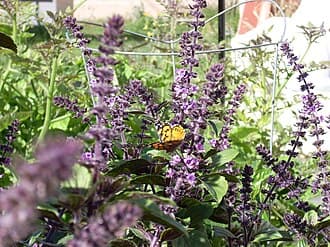
African Blue Basil
Ocimum kilimandscharicum × basilicum
herbAfrican Blue Basil is a sterile hybrid (Camphor Basil x Dark Opal) discovered in Ohio in the early 1980s, with deep purple-edged leaves, striking purple flower spikes, and a camphor-mint scent. Because it is sterile and cannot set seed, the plant blooms continuously all summer and is one of the very best pollinator plants in the garden, drawing bees, hummingbirds, and beneficial insects.
☀️
Sun
full sun
💧
Water
Every 3 days
🌾
Harvest
~60 days
📊
Difficulty
easy
🌱
Lifecycle
tender perennial
Perennial in warm zones; grown as an annual where winters freeze
↔️
Spacing
18-24 in apart
⬇️
Planting Depth
Root cuttings, then plant at same depth as nursery pot
🧪
Soil pH
6.0-7.5
Growing Details
Soil Type
Rich, well-draining
Hardiness Zones
Zones 9 – 11
When to Fertilize
Light feed monthly during growing season
Fertilizer
Balanced 10-10-10 or fish emulsion
🌱 Growing Guide
African Blue Basil is propagated only by stem cuttings (it is sterile and produces no seeds). Buy plants in spring or root your own from cuttings of an established plant. Plant in full sun on well-drained moderately fertile soil with pH 6.0 to 7.5. Water deeply when the top inch is dry. The plant is a short-lived perennial in zones 10 to 11 and grown as an annual elsewhere. Pinch flowers if you want bushier foliar growth (but the flowers are the main attraction).
Planting Calendar
Sign in to personalize →🌱
Start seeds indoors
Mar 4
🌿
Transplant outdoors
Apr 29
🌾
Projected first harvest
Jun 28
JJan
FFeb
MMar
AApr
MMay
JJun
JJul
AAug
SSep
OOct
NNov
DDec
✅ Plant alongside
Good neighbors that attract beneficial insects or deter pests
- Tomatoes: Pollinator-attracting flowers improve tomato fruit set
- Peppers: Shared warm-season conditions; bees move between flowers
- Squash: Brings bees that pollinate squash blossoms
- Cucumbers: Boosts pollination on shared bed cucurbits
🛡️ Pest & disease prevention
Proactive ways to stop trouble before it starts. Tap a name with an arrow for its full guide
Blast with water, encourage ladybugs
African Blue Basil is more resistant than common basil; still rotate basil family beds for 3 years
Iron phosphate bait around young plants
Cover or bring indoors when night temperatures dip below 50F
🌾 Harvest & storage
Harvest leaves once the plant reaches 6 to 8 in tall. The camphor-mint flavor is intense (much stronger than sweet basil) and best used sparingly; works beautifully in Thai dishes, herbal teas, and infused vinegars. Take cuttings throughout the season to overwinter indoors (the only way to keep your African Blue from year to year in cold climates). Cut stems for vase use; the flowers are long-lasting.
🥗 Nutrition & benefits
Pollinator value: African Blue Basil is among the top-rated bee plants in the garden, with continuous bloom from late spring through frost. Its sterile status means no seed production but exceptional pollen and nectar output. The leaves also brew into an aromatic camphor-mint tea traditionally used as a mild digestive.
For educational and informational purposes only. HomeSown is not medical, health, or other professional advice. Always positively identify any plant before handling or eating it; some plants, and some parts of otherwise-edible plants, are toxic. Consult a qualified professional before consuming or otherwise using any plant, especially if you are pregnant, nursing, taking medication, or have a health condition.