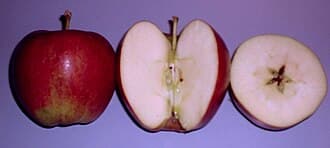
Braeburn Apple
Malus domestica 'Braeburn'
fruitBraeburn is the crisp sweet-tart apple discovered as a chance seedling in New Zealand in 1952, with a refreshing balance of acidity and sugar that carries spicy notes of cinnamon, nutmeg, and citrus. The variety holds its shape under heat, which is why Braeburn is the chef-preferred apple for pies, tarts, and baked dishes that need apple chunks to stay intact.
☀️
Sun
full sun
💧
Water
Every 5 days
🌾
Harvest
~24 months
to first harvest
📊
Difficulty
medium
🌱
Lifecycle
perennial
Comes back every year
↔️
Spacing
12-15 ft (semi-dwarf)
⬇️
Planting Depth
Graft union 4 in above soil
🧪
Soil pH
6.0-7.0
Growing Details
Soil Type
Rich, well-draining
Hardiness Zones
Zones 5 – 8
When to Fertilize
Early spring before bud break
Fertilizer
Compost; balanced 10-10-10 only if growth is weak
🌱 Growing Guide
Plant in full sun on well-drained loam in zones 5 to 8. Set the graft union 4 in above soil. Braeburn needs a long warm season for full color and flavor development; in cooler zones the variety still bears but the fruit lacks the deep coloring. Cross-pollination is required: Gala, Granny Smith, and Fuji all work. Train to a central leader; prune in late winter. Thin clusters early for size.
Planting Calendar
Sign in to personalize →🌿
Direct sow
Apr 15
🌾
Projected first harvest
Oct 7 · Year 3
JJan
FFeb
MMar
AApr
MMay
JJun
JJul
AAug
SSep
OOct
NNov
DDec
Year 1
✅ Plant alongside
Good neighbors that attract beneficial insects or deter pests
- Chives: Repels aphids and may suppress apple scab
- Comfrey: Chop-and-drop mulch returns potassium to surface roots
- White Clover: Orchard-floor nitrogen fixer
- Yarrow: Hosts beneficial parasitic wasps
❌ Keep away from
Walnut
🛡️ Pest & disease prevention
Proactive ways to stop trouble before it starts. Tap a name with an arrow for its full guide
Rake fallen leaves, prune for airflow; sulfur in wet years
Pheromone traps, bag fruit, pick up drops
Avoid heavy nitrogen; prune blighted shoots 12 in below cankers and disinfect tools
Kaolin clay at petal fall; collect early drops
🌾 Harvest & storage
Braeburn ripens in late October in the Northern Hemisphere (mid-March to early April in New Zealand). The orange-red blush deepens against a yellow-green background as fruit matures. Pick when the seeds inside are dark brown and the fruit gives a slight twist-and-lift release from the spur. Refrigerate near 33F; properly stored Braeburn keeps 3 to 4 months without softening.
🥗 Nutrition & benefits
About 52 calories per 100 g with 2.4 g fiber, 5 mg vitamin C, and 107 mg potassium. Braeburns higher acidity slows the blood-sugar response compared to sweeter dessert apples, and the variety holds its vitamin C better than most through extended storage.
⚠️ Toxicity & safety
Eat the flesh, not the seeds. Apple and pear seeds contain amygdalin, a cyanide-releasing compound. Swallowing a seed or two is harmless, but do not deliberately eat or crush the seeds or cores in quantity.
For educational and informational purposes only. HomeSown is not medical, health, or other professional advice. Always positively identify any plant before handling or eating it; some plants, and some parts of otherwise-edible plants, are toxic. Consult a qualified professional before consuming or otherwise using any plant, especially if you are pregnant, nursing, taking medication, or have a health condition.