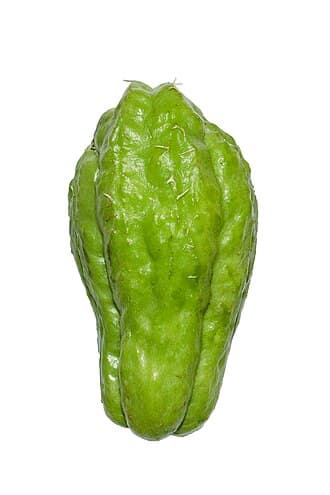
Chayote
Sechium edule
vegetableChayote is a vigorous, tendril-climbing vine of the gourd family grown for its pale-green, pear-shaped fruit, each holding a single soft, flat, edible seed. The crisp, mild flesh tastes like a cross between a cucumber and a young summer squash and is eaten raw or cooked, skin and all when young. Beyond the fruit, the tender vine tips are eaten as a green and the swollen tuberous root is edible like a potato. A single plant is enormously productive, its vines reaching 30 to 50 feet, so it is usually trained up a strong arbor or fence. It is a tender perennial in frost-free gardens - often most productive in its second and third years - and grown as a long-season annual where winters are mild.
☀️
Sun
full sun
💧
Water
Every 4 days
🌾
Harvest
~120 days
📊
Difficulty
medium
🌱
Lifecycle
perennial
Comes back every year
↔️
Spacing
10 ft apart on a strong support
⬇️
Planting Depth
Plant the whole sprouted fruit on its side, stem end at the surface
🧪
Soil pH
6.0-6.8
Growing Details
Soil Type
Rich, well-draining
Hardiness Zones
Zones 8 – 12
When to Fertilize
A balanced feed at planting and through the growing season
Fertilizer
Balanced general-purpose fertilizer
🌱 Growing Guide
Chayote is a heat-loving tropical that needs a long, warm, frost-free season and a sturdy support. The whole fruit is the seed: plant a single sprouted fruit on its side, fat end down, with the narrow stem end tilted up and just at the soil surface, after all danger of frost has passed and the soil has warmed to at least 65F. Give it full sun, rich well-drained soil, and a strong trellis, arbor, or fence to climb. Space plants about 10 feet apart, since each vine is huge. Keep it consistently watered through the season and feed a balanced fertilizer as it grows. In zones 9 to 12 it returns each year from the root and yields best once established; in cooler areas grow it as an annual and start the fruit indoors to gain time, or shelter the crown over winter.
Planting Calendar
Sign in to personalize →🌿
Direct sow
May 6
🌾
Projected first harvest
Sep 3
JJan
FFeb
MMar
AApr
MMay
JJun
JJul
AAug
SSep
OOct
NNov
DDec
✅ Plant alongside
Good neighbors that attract beneficial insects or deter pests
- Corn: Tall stalks share the warm-season bed and can help anchor the vigorous climbing vine
- Provider Bush Bean: A legume that fixes nitrogen for the hungry, fast-growing chayote vine
- French Marigold: Helps suppress the root-knot nematodes that attack chayote roots in sandy soil
🛡️ Pest & disease prevention
Proactive ways to stop trouble before it starts. Tap a name with an arrow for its full guide
Rinse colonies from new growth and encourage ladybugs; treat heavy clusters with insecticidal soap
A hot, dry-weather pest - rinse the foliage and keep the vine from drought-stressing
Rotate planting sites, build organic matter, and interplant marigolds in sandy ground
A white leaf coating in humid spells - train the vine open for airflow and avoid wetting the leaves late in the day
🌾 Harvest & storage
Each fruit is ready about 30 to 35 days after its flower is pollinated; the vine bears heavily in late summer and fall, peaking before frost. Pick chayote young and tender, when the fruit is firm and 4 to 6 inches long and the skin is still smooth, for the best texture - left on the vine it toughens and the single seed sprouts inside. Harvest the tender shoot tips anytime as a cooked green. Where the vine is perennial, the starchy roots can be dug after a few years. Fruit stores for weeks in a cool spot. The peeling sap can leave a sticky film on hands, so some cooks wear gloves or peel under running water.
🥗 Nutrition & benefits
Chayote is very light at about 19 calories per 100 g, with fiber, a useful dose of vitamin C, a good amount of folate (around 90 mcg), and some potassium and manganese. Mild and refreshing, it is eaten raw in slaws and salads or cooked in soups, stir-fries, and stews, where it readily takes on other flavors.
For educational and informational purposes only. HomeSown is not medical, health, or other professional advice. Always positively identify any plant before handling or eating it; some plants, and some parts of otherwise-edible plants, are toxic. Consult a qualified professional before consuming or otherwise using any plant, especially if you are pregnant, nursing, taking medication, or have a health condition.