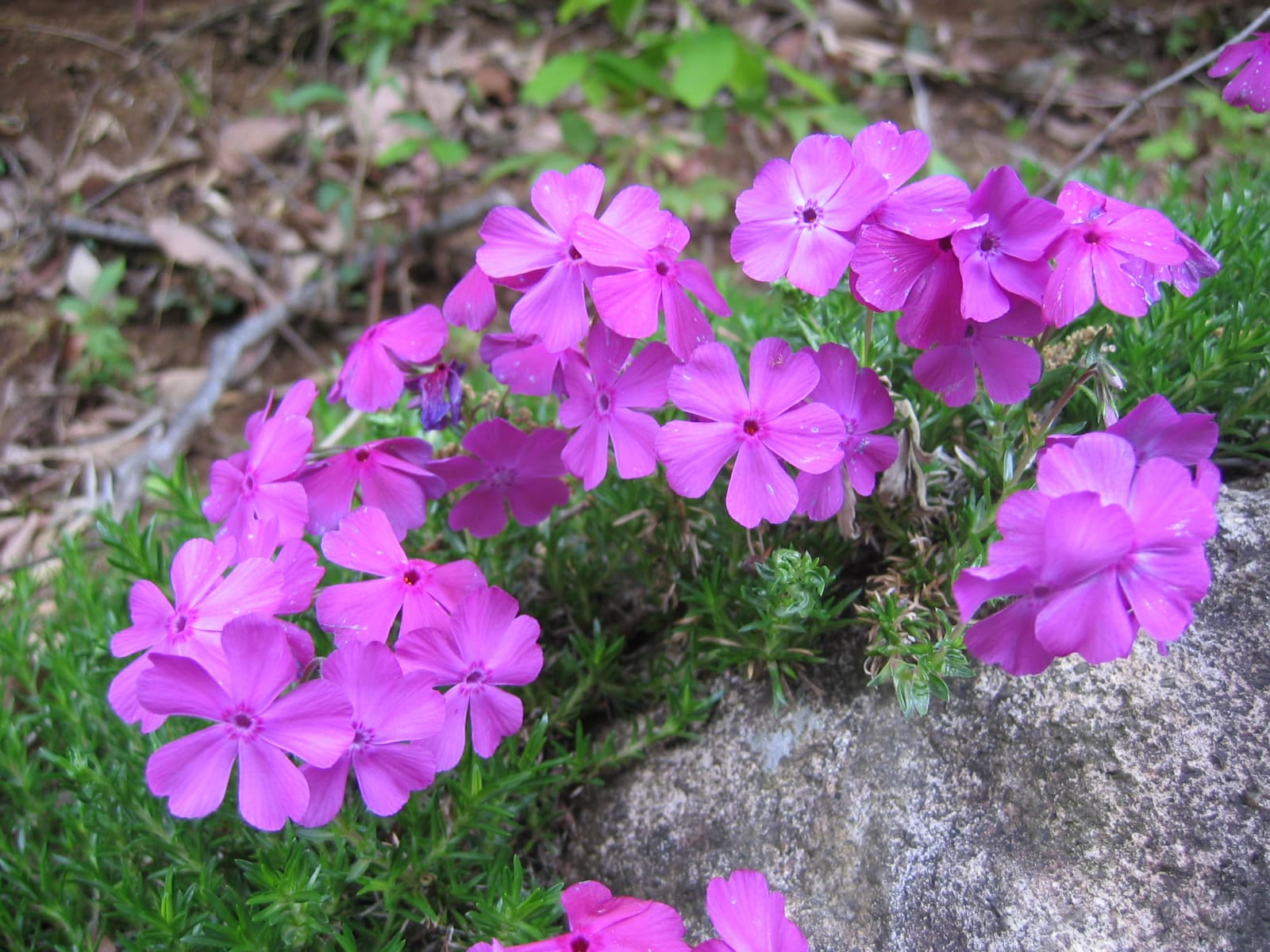
Creeping Phlox
Phlox subulata
flowerCreeping phlox, also called moss phlox, is a low, mat-forming native perennial just 4 to 6 in tall that spreads 2 to 3 ft wide into a dense carpet of evergreen, needle-like foliage. In late April and early May it disappears under loose clusters of small star-shaped flowers in pink, lavender, white, or red-purple. Native to central and eastern North America, it is a tough, long-lived groundcover for slopes, rock gardens, wall edges, and the front of borders, and it tolerates hot, dry sites better than other phlox.
☀️
Sun
full sun
💧
Water
Every 7 days
🌸
Bloom
~30 days
📊
Difficulty
easy
🌱
Lifecycle
perennial
Comes back every year
↔️
Spacing
12-18 in apart
⬇️
Planting Depth
Set the crown at the soil line
🧪
Soil pH
6.0-7.0
Growing Details
Soil Type
Sandy, gravelly, or loamy; well-drained
Hardiness Zones
Zones 3 – 9
When to Fertilize
Light feeding in early spring
Fertilizer
Balanced or compost; low needs
🌱 Growing Guide
Plant creeping phlox in full sun, with a little dappled afternoon shade welcome in hot, humid summers, in well-drained sandy, gravelly, or loamy soil. It tolerates poor, rocky ground and has moderate drought tolerance once established. Space plants so they can knit together into a mat. After the spring bloom finishes, cut the stems back by about half to keep the planting dense and tidy and encourage fresh growth. It is largely trouble-free; good drainage prevents most problems.
🌼 Have a different variety?Cultivars of the same species usually share the same basic care, and they differ mainly in flower color, height, and bloom form, not in how you grow them. So this guide still applies even if your exact variety isn't the one shown.
Planting Calendar
Sign in to personalize →🌿
Direct sow
Apr 15
🌸
Projected first bloom
May 15
JJan
FFeb
MMar
AApr
MMay
JJun
JJul
AAug
SSep
OOct
NNov
DDec
✅ Plant alongside
Good neighbors that attract beneficial insects or deter pests
- Creeping Sedum: Another low mat-former that shares the sunny, sharply drained rock-garden niche
- Candytuft: An evergreen groundcover that blooms white at the same season for a layered carpet
- Dianthus: Low, sun-loving, well-drained companion that extends the bloom season
🛡️ Pest & disease prevention
Proactive ways to stop trouble before it starts. Tap a name with an arrow for its full guide
Flare in hot, dry conditions; rinse the foliage and avoid drought stress
A risk in wet, humid soils; ensure good drainage and avoid waterlogged sites
A soil fungus in warm, wet conditions; improve drainage and choose resistant cultivars such as Fort Hill or White Delight
🌸 Blooms & cutting
Creeping phlox is grown as a groundcover, not for harvest. The one important seasonal task is to shear the stems back by half right after the spring flush ends; this keeps the mat thick and shapely and can prompt a few rebloom flowers. Otherwise it needs little attention.
🥗 Nutrition & benefits
Creeping phlox is an ornamental groundcover, not edible, and is non-toxic to people, dogs, cats, and horses. Its value is a tough, evergreen, weed-suppressing carpet that erupts in spring color on slopes and rock gardens and feeds early pollinators. Have a different variety? Cultivars of the same species share the same basic care, so this guide still applies even if your exact color is not shown.
For educational and informational purposes only. HomeSown is not medical, health, or other professional advice. Always positively identify any plant before handling or eating it; some plants, and some parts of otherwise-edible plants, are toxic. Consult a qualified professional before consuming or otherwise using any plant, especially if you are pregnant, nursing, taking medication, or have a health condition.