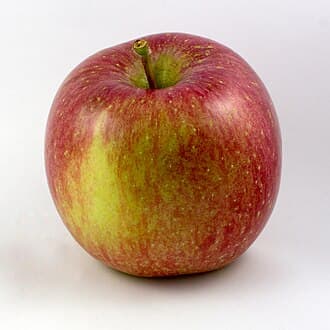
Fuji Apple
Malus domestica 'Fuji'
fruitFuji is a sweet, late-season Japanese apple beloved for its long storage life and balanced flavor. The bicolored skin shows pink-red striping over a green-yellow background, and the dense flesh snaps cleanly with a juicy, honey-sweet bite. It is excellent for fresh eating, slicing into salads, and long winter storage.
☀️
Sun
full sun
💧
Water
Every 5 days
🌾
Harvest
~24 months
to first harvest
📊
Difficulty
medium
🌱
Lifecycle
perennial
Comes back every year
↔️
Spacing
12-15 ft (semi-dwarf)
⬇️
Planting Depth
Graft union 4 in above soil
🧪
Soil pH
6.0-7.0
Growing Details
Soil Type
Rich, well-draining
Hardiness Zones
Zones 5 – 8
When to Fertilize
Early spring before bud break
Fertilizer
Compost or balanced 10-10-10 only if shoot growth is under 12 in per year
🌱 Growing Guide
Plant bareroot or container trees in early spring once the soil thaws. Site in full sun (6 plus hours) on well-drained loamy soil and avoid low frost pockets. Position the graft union about 4 inches above the soil line so the variety does not root above the rootstock. Mulch a 3-foot ring 2 to 3 inches deep, kept off the trunk. Train to a central leader or modified central leader and prune in late winter to open the canopy for sunlight and airflow. Fuji needs a cross-pollinator that blooms midseason: Gala, Honeycrisp, and Granny Smith all overlap well. Thin to one apple per cluster about a month after bloom for larger fruit and to discourage biennial bearing.
Planting Calendar
Sign in to personalize →🌿
Direct sow
Apr 15
🌾
Projected first harvest
Oct 12 · Year 3
JJan
FFeb
MMar
AApr
MMay
JJun
JJul
AAug
SSep
OOct
NNov
DDec
Year 1
✅ Plant alongside
Good neighbors that attract beneficial insects or deter pests
- Chives: Released sulfur compounds discourage aphids and may suppress apple scab when planted around the drip line
- Comfrey: Deep taproot mines minerals; chopped leaves make a nutrient-rich mulch under the tree
- White Clover: Living mulch that fixes nitrogen and feeds pollinators in the orchard floor
- Yarrow: Attracts hoverflies and parasitic wasps that prey on codling moth and aphids
❌ Keep away from
Walnut
🛡️ Pest & disease prevention
Proactive ways to stop trouble before it starts. Tap a name with an arrow for its full guide
Choose scab-resistant rootstock-scion combinations, rake and remove fallen leaves in autumn to break the spore cycle, and prune for airflow
Hang pheromone traps to time spray windows, bag young fruit in paper or nylon footies, and pick up dropped apples weekly
Avoid heavy nitrogen, prune blighted shoots 12 inches below visible cankers, and disinfect tools between cuts with 10 percent bleach or 70 percent alcohol
Apply kaolin clay at petal fall, jar the trunk at dawn over a tarp to dislodge adults, and pick up early drops
🌾 Harvest & storage
Fuji ripens in mid to late October when the background skin color shifts from green to yellow-green and the seeds turn dark brown. Lift each apple in the palm of your hand, then twist and pull in a single motion so the stem stays with the fruit. Cool to near 33F as fast as possible; properly stored Fuji keeps four to six months in a cold crisper or root cellar.
🥗 Nutrition & benefits
About 52 calories per 100 g with 2.4 g of fiber, 5 mg of vitamin C, and 107 mg of potassium. The skin carries most of the fiber and antioxidant polyphenols, so eat unpeeled when you can.
⚠️ Toxicity & safety
Eat the flesh, not the seeds. Apple and pear seeds contain amygdalin, a cyanide-releasing compound. Swallowing a seed or two is harmless, but do not deliberately eat or crush the seeds or cores in quantity.
For educational and informational purposes only. HomeSown is not medical, health, or other professional advice. Always positively identify any plant before handling or eating it; some plants, and some parts of otherwise-edible plants, are toxic. Consult a qualified professional before consuming or otherwise using any plant, especially if you are pregnant, nursing, taking medication, or have a health condition.