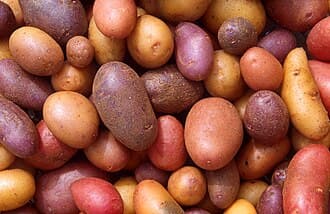
German Butterball Potato
Solanum tuberosum 'German Butterball'
vegetableGerman Butterball is a yellow-fleshed all-purpose potato introduced in 1988 and the first-place winner of Rodale Organic Gardening Magazines Taste-Off Contest. The pale yellow skin is lightly netted and the dense waxy gold flesh cooks up creamy with such a rich buttery flavor that the variety is often described as butterless.
☀️
Sun
full sun
💧
Water
Every 3 days
🌾
Harvest
~110 days
📊
Difficulty
easy
🌱
Lifecycle
annual
One season, then done
↔️
Spacing
12 in in row, 30 in between rows
⬇️
Planting Depth
3-4 in
🧪
Soil pH
5.0-6.5
Growing Details
Soil Type
Loose, well-draining
Hardiness Zones
Zones 3 – 9
Grown as an annual. This range is its winter hardiness, but you can grow it for a single season in any zone.
When to Fertilize
At planting; side-dress at hilling
Fertilizer
10-10-10 at 1.5 lb per 100 sq ft pre-plant
🌱 Growing Guide
Plant certified seed pieces 2 weeks before the last frost. Cut and cure for 2 to 3 days, then set 3 to 4 in deep, 12 in apart in rows 30 in apart. Hill twice during the season. German Butterball is late season, maturing in 100 to 135 days; long-season patience pays off with an exceptional storage potato.
Planting Calendar
Sign in to personalize →🌿
Direct sow
Apr 1
🌾
Projected first harvest
Jul 20
JJan
FFeb
MMar
AApr
MMay
JJun
JJul
AAug
SSep
OOct
NNov
DDec
✅ Plant alongside
Good neighbors that attract beneficial insects or deter pests
- Beans: Bush beans fix nitrogen and may suppress Colorado potato beetle
- Horseradish: Corner plantings may discourage Colorado potato beetle
- Marigolds: Suppress nematodes in the tuber zone
- Cilantro: Attracts beneficial insects that hunt aphids and beetles
❌ Keep away from
TomatoCucumberSquash
🛡️ Pest & disease prevention
Proactive ways to stop trouble before it starts. Tap a name with an arrow for its full guide
Hand-pick adults daily, crush egg masses, and rotate beds for 3 years
Use certified seed and avoid overhead watering
Avoid planting after sod; use potato slice traps
Maintain even soil moisture during tuber initiation and keep pH below 5.5 in scab-prone beds
🌾 Harvest & storage
German Butterball is ready 100 to 135 days after planting. Wait for full vine die-back, then dig with a fork. Cure in the dark at 60 to 65F for 10 to 14 days to toughen the skin, then store at 35 to 40F with high humidity. Properly cured tubers keep 6 to 8 months, making this one of the best winter-keeper varieties.
🥗 Nutrition & benefits
About 77 calories per 100 g cooked with 2 g fiber, 19.7 mg vitamin C, and 421 mg potassium. The yellow flesh carries notable carotenoids and the variety has a relatively low glycemic index for a potato.
⚠️ Toxicity & safety
Eat the tubers, not the green parts. Potato leaves, stems, sprouts, and any green-tinged or sprouting tubers contain solanine and should not be eaten. Store tubers in the dark, and cut away any green or sprouts before cooking.
For educational and informational purposes only. HomeSown is not medical, health, or other professional advice. Always positively identify any plant before handling or eating it; some plants, and some parts of otherwise-edible plants, are toxic. Consult a qualified professional before consuming or otherwise using any plant, especially if you are pregnant, nursing, taking medication, or have a health condition.