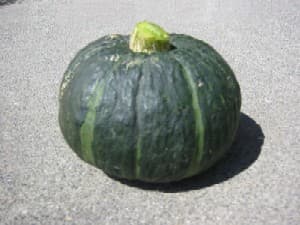
Kabocha Squash
Cucurbita maxima 'Kabocha'
vegetableA Japanese winter squash with dark green skin and extraordinarily sweet, dry, dense orange flesh with a flavor resembling sweet potato or roasted chestnuts. One of the highest-sugar winter squashes available. Smaller than a butternut, the Kabocha is ideal for soups, tempura, stews, and as a butternut substitute anywhere a drier, sweeter squash is preferred.
☀️
Sun
full sun
💧
Water
Every 3 days
🌾
Harvest
~95 days
📊
Difficulty
easy
🌱
Lifecycle
annual
One season, then done
↔️
Spacing
3-4 ft between plants
⬇️
Planting Depth
1 in
🧪
Soil pH
6.0-7.0
Growing Details
Soil Type
Rich, well-draining
Hardiness Zones
Zones 3 – 10
Grown as an annual. This range is its winter hardiness, but you can grow it for a single season in any zone.
When to Fertilize
At planting with rich compost; side-dress balanced fertilizer when vines extend to 2 feet
Fertilizer
Rich compost at planting; balanced 10-10-10; low-nitrogen formula at flowering
🌱 Growing Guide
Sow directly after last frost or transplant 3-week-old starts into warm soil. Vines spread 6 to 8 feet. Give ample room or trellis. Allow 95 to 110 days for full maturity. The skin turns from bright green to a dull matte finish when ripe. Leave on the vine as long as possible before frost. Cure at room temperature for 2 weeks after harvest to convert starches to sugar.
Planting Calendar
Sign in to personalize →🌱
Start seeds indoors
Mar 25
🌿
Transplant outdoors
Apr 29
🌾
Projected first harvest
Aug 2
JJan
FFeb
MMar
AApr
MMay
JJun
JJul
AAug
SSep
OOct
NNov
DDec
✅ Plant alongside
Good neighbors that attract beneficial insects or deter pests
- Corn: Three sisters partner: tall corn provides slight shade and structure
- Beans: Nitrogen fixing; ground cover combination
- Nasturtium: Deters squash bugs at the bed border
- Borage: Attracts pollinators essential for kabocha fruit set
❌ Keep away from
Potato
🛡️ Pest & disease prevention
Proactive ways to stop trouble before it starts. Tap a name with an arrow for its full guide
Plant after peak moth flight in June-July; Bt application at stem base; wrap stems in row cover fabric
Check undersides of large leaves weekly; destroy bronze egg clusters; diatomaceous earth at stem base
Late-season mildew common and usually tolerated if fruit is nearly mature; neem oil early if needed
Row cover on seedlings; kaolin clay spray; yellow sticky traps
🌾 Harvest & storage
Harvest when skin turns from bright to dull matte green and corky spots appear on the surface. Stem should be dry and firm. Cut with 2 to 3 inches of stem attached. Cure at 75 to 80 F for 10 to 14 days to maximize sweetness. Store at 50 to 60 F for up to 4 months. Kabocha skin is edible when cooked.
🥗 Nutrition & benefits
Excellent source of beta-carotene (vitamin A), vitamin C, potassium, and iron. High in complex carbohydrates and fiber. One of the highest-sugar winter squashes. The edible skin adds additional fiber and antioxidants.
For educational and informational purposes only. HomeSown is not medical, health, or other professional advice. Always positively identify any plant before handling or eating it; some plants, and some parts of otherwise-edible plants, are toxic. Consult a qualified professional before consuming or otherwise using any plant, especially if you are pregnant, nursing, taking medication, or have a health condition.