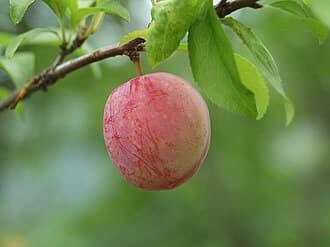
Methley Plum
Prunus salicina 'Methley'
fruitMethley is the easiest plum to grow in the home orchard: self-fertile, low-chill, and incredibly productive. The medium reddish-purple Japanese plums have juicy sweet red flesh ideal for fresh eating and jam, and ripen in June to July, earlier than most other tree fruit. A reliable workhorse for backyard growers from zones 5 to 9.
☀️
Sun
full sun
💧
Water
Every 5 days
🌾
Harvest
~24 months
to first harvest
📊
Difficulty
easy
🌱
Lifecycle
perennial
Comes back every year
↔️
Spacing
15-20 ft (semi-dwarf)
⬇️
Planting Depth
Graft union 1-2 in above soil
🧪
Soil pH
6.0-7.0
Growing Details
Soil Type
Rich, well-draining
Hardiness Zones
Zones 5 – 9
When to Fertilize
Early spring before bud break
Fertilizer
Compost; light 10-10-10 if growth is weak
🌱 Growing Guide
Plant in full sun on well-drained loam. Self-fertile, so one tree bears reliably, though a second Japanese plum boosts yield. Set the graft union 1 to 2 in above soil. Japanese plums grow vigorously and need heavy pruning; train to an open vase, prune annually in late winter to keep the canopy open and the fruit accessible. Thin clusters in early summer to one fruit every 4 in along the branch.
Planting Calendar
Sign in to personalize →🌿
Direct sow
Apr 15
🌾
Projected first harvest
Jun 24 · Year 3
JJan
FFeb
MMar
AApr
MMay
JJun
JJul
AAug
SSep
OOct
NNov
DDec
Year 1
✅ Plant alongside
Good neighbors that attract beneficial insects or deter pests
- Chives: Repels aphids and may discourage plum curculio
- Comfrey: Mineral-mining mulch returns potassium
- Yarrow: Hosts parasitic wasps that hunt curculio and aphids
- Daffodils: Spring bulbs around the trunk deter voles
🛡️ Pest & disease prevention
Proactive ways to stop trouble before it starts. Tap a name with an arrow for its full guide
Kaolin clay at petal fall; jar trunk at dawn; pick up early drops
Cut out swollen galls 4 in below knots in dormant season; dispose off-site
Prune for airflow, remove mummies before bloom, harvest before fruit softens
Hand-pick into soapy water at dawn; never use pheromone traps
🌾 Harvest & storage
Methley ripens in June to July, well before most other plums. Pick when the fruit is dark purple-red and gives to gentle thumb pressure; Japanese plums can be picked slightly underripe and will finish on the counter. Eat fresh, freeze pitted halves, or make plum jam (Methley sets reliably without added pectin because of natural pectin levels). The tree often bears in spectacular quantity; sharing with neighbors becomes a tradition.
🥗 Nutrition & benefits
About 46 calories per 100 g fresh with 1.4 g fiber, 9.5 mg vitamin C, 157 mg potassium, and 6.4 mcg vitamin K. Japanese plums are richer in vitamin C than European plums and supply notable amounts of chlorogenic acid and anthocyanins, both studied for cardiovascular health.
⚠️ Toxicity & safety
Eat the flesh, not the pit. The kernel inside the pit contains amygdalin, a cyanide-releasing compound - discard the pits and never eat or crush the seeds inside.
For educational and informational purposes only. HomeSown is not medical, health, or other professional advice. Always positively identify any plant before handling or eating it; some plants, and some parts of otherwise-edible plants, are toxic. Consult a qualified professional before consuming or otherwise using any plant, especially if you are pregnant, nursing, taking medication, or have a health condition.