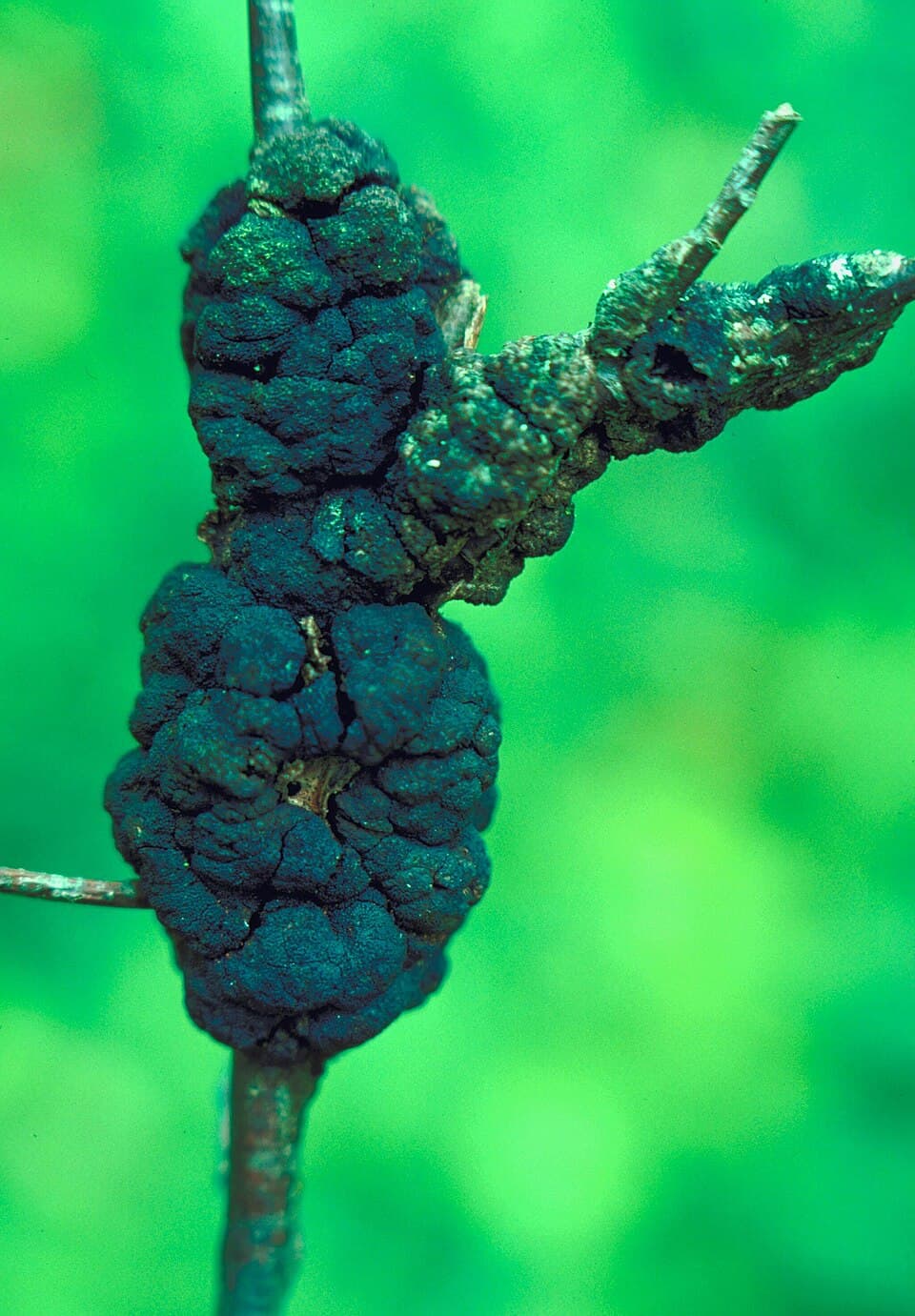
Black Knot
Apiosporina morbosa
A fungal disease of plum and cherry trees that grows hard, black, warty swellings along the twigs and branches, like lumps of coal stuck on the wood. Common on backyard and wild plums and cherries, black knot spreads year to year, killing twigs and limbs and, if left alone, eventually whole trees.
🔎 How to spot it
Look for elongated swellings on twigs and branches: in the first year they are soft, greenish-brown bulges, and by the second year they harden into rough, black, cracked galls that wrap partway or fully around the wood. The knots range from an inch to many inches long, and girdled twigs beyond a knot wilt and die.
🥀 Damage it causes
The knots girdle and kill the twigs and branches beyond them, and over several years the disease can deform and decline a tree or kill it outright. Each knot also pumps out spores that start new infections, so an untended tree, or a wild plum or cherry nearby, becomes a steady source of disease.
🔬 What causes it
Black knot is caused by the fungus Apiosporina morbosa, native to North America, which overwinters in the knots. In spring, rainy weather, the knots forcibly release spores that blow and splash onto the new green shoots, infecting them if they stay wet long enough. The infection grows for a year before the telltale black knot erupts the following season.
🛡️ Prevent it
Inspect plums and cherries each winter and prune out every knot before spring, cutting 6 to 8 inches below each one since the fungus runs beyond the visible gall, and destroy the prunings. Remove nearby wild or neglected plums and cherries that act as spore sources. Plant resistant varieties where available and keep trees vigorous.
🧯 If it is already here
Prune out all knots in late winter before the spring spore release, cutting well below each knot, and burn or bury the wood. On valued trees, protectant fungicides applied in spring as the buds break and shoots grow can shield the new growth, but only alongside thorough pruning; spraying without removing the knots does little.
💡 Good to know
The coal-black, warty knots are unmistakable, and they are the fungus winter home and spore factory, so winter pruning is the heart of control. Because spores blow in from wild and neglected Prunus trees, a clean backyard tree can still be reinfected from a hedgerow plum down the road, so check yearly.
🌱 Plants it affects
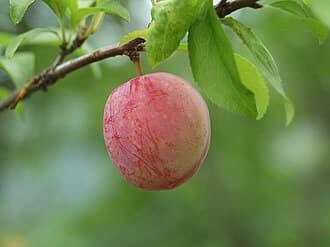
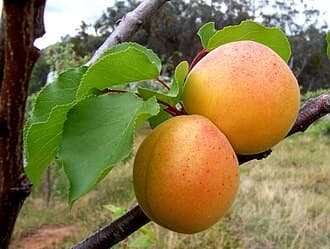
13 plants in the library can be affected by this problem





For educational and informational purposes only. Disease management advice is general guidance drawn from university cooperative extension sources; always identify a problem positively and read and follow the label on any product before use, especially around food crops, children, and pets.