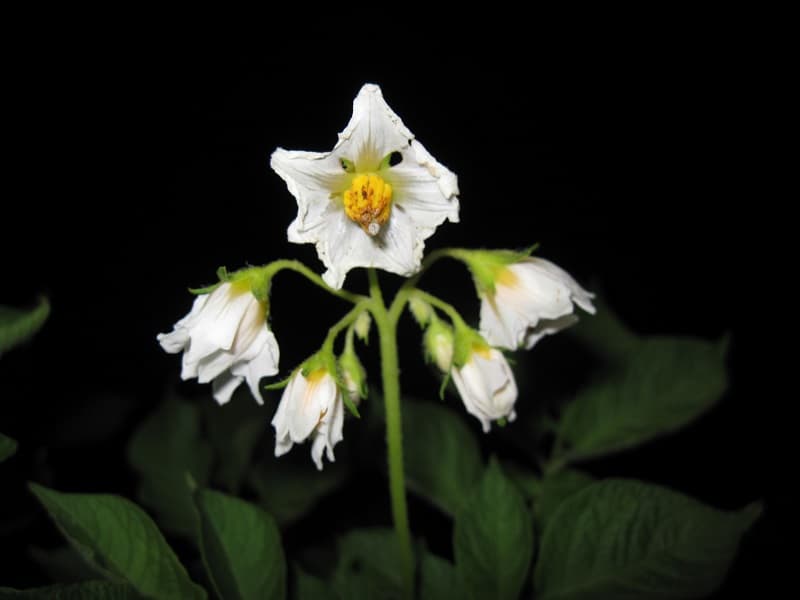
Norland Potato
Solanum tuberosum 'Norland'
vegetableNorland is the workhorse red potato for short-season northern gardens, developed at North Dakota State University and ready in just 70 days. Dark Red Norland is instantly recognizable by smooth deep-red skin with famously shallow eyes (which makes prep effortless) and firm fine-grained white flesh that boils, mashes, and steams beautifully.
☀️
Sun
full sun
💧
Water
Every 3 days
🌾
Harvest
~70 days
📊
Difficulty
easy
🌱
Lifecycle
annual
One season, then done
↔️
Spacing
12 in in row, 30 in between rows
⬇️
Planting Depth
3-4 in
🧪
Soil pH
5.0-6.5
Growing Details
Soil Type
Loose, well-draining
Hardiness Zones
Zones 3 – 9
Grown as an annual. This range is its winter hardiness, but you can grow it for a single season in any zone.
When to Fertilize
At planting; side-dress at hilling
Fertilizer
10-10-10 at 1.5 lb per 100 sq ft pre-plant
🌱 Growing Guide
Plant certified seed pieces 2 to 3 weeks before the last frost. Cut and cure 2 days, then set 3 to 4 in deep, 12 in apart in rows 30 in apart. Hill soil twice during the season. Norland is the earliest red potato available and outperforms most reds in scab, rhizoctonia, and potato virus A resistance, which makes it forgiving for first-time potato growers.
Planting Calendar
Sign in to personalize →🌿
Direct sow
Apr 1
🌾
Projected first harvest
Jun 10
JJan
FFeb
MMar
AApr
MMay
JJun
JJul
AAug
SSep
OOct
NNov
DDec
✅ Plant alongside
Good neighbors that attract beneficial insects or deter pests
- Beans: Fix nitrogen and may discourage Colorado potato beetle
- Horseradish: Corner plantings may deter Colorado potato beetle
- Marigolds: Suppress soil nematodes that damage tubers
- Cilantro: Flowers attract beneficial insects
❌ Keep away from
TomatoCucumberSquash
🛡️ Pest & disease prevention
Proactive ways to stop trouble before it starts. Tap a name with an arrow for its full guide
Hand-pick adults and crush egg masses; rotate beds for 3 years
Use certified seed and avoid overhead watering in cool wet weather
Avoid sod and use potato slice traps
Norland is scab-resistant by breeding, but still benefits from consistent moisture during tuber set
🌾 Harvest & storage
Norland matures in 70 to 80 days, the fastest of any red potato. Lift new potatoes as soon as the plants bloom (about 60 days) for tender baby reds, or wait until the vines die back for full-sized storage potatoes. Cure for 1 to 2 weeks at 60F before cold storage; Norland keeps 3 to 4 months under good conditions.
🥗 Nutrition & benefits
About 77 calories per 100 g cooked with 2 g fiber, 19.7 mg vitamin C, and 421 mg potassium. Red-skinned potatoes carry additional anthocyanins in the skin, so eat unpeeled when you can for full antioxidant value.
⚠️ Toxicity & safety
Eat the tubers, not the green parts. Potato leaves, stems, sprouts, and any green-tinged or sprouting tubers contain solanine and should not be eaten. Store tubers in the dark, and cut away any green or sprouts before cooking.
For educational and informational purposes only. HomeSown is not medical, health, or other professional advice. Always positively identify any plant before handling or eating it; some plants, and some parts of otherwise-edible plants, are toxic. Consult a qualified professional before consuming or otherwise using any plant, especially if you are pregnant, nursing, taking medication, or have a health condition.