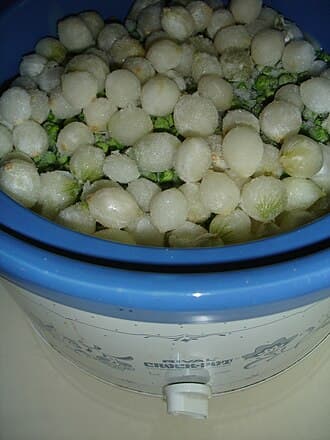
Pearl Onion
Allium cepa 'Pearl'
vegetableTiny pearl-like white onions typically 1 inch or smaller at harvest. The classic onion for pickling in jars, creamed pearl onions at holiday dinners, and as a garnish in cocktails and stews. Very mild, sweet flavor in a compact package. Grow them fresh from the garden for far superior flavor compared to frozen pearl onions.
☀️
Sun
full sun
💧
Water
Every 3 days
🌾
Harvest
~90 days
📊
Difficulty
easy
🌱
Lifecycle
biennial
Leaves year 1, flowers year 2
↔️
Spacing
1-2 in (intentionally dense for pearl size)
⬇️
Planting Depth
1/2 in
🧪
Soil pH
6.0-7.0
Growing Details
Soil Type
Loose, well-draining
Hardiness Zones
Zones 3 – 10
Grown as an annual. This range is its winter hardiness, but you can grow it for a single season in any zone.
When to Fertilize
Balanced fertilizer at planting; light nitrogen side-dress once
Fertilizer
Balanced granular; moderate nitrogen
🌱 Growing Guide
Grow from sets or transplants. For pearl-sized onions, plant sets 1 to 2 inches apart. Closer spacing limits bulb size and is intentional. Pearl onions mature faster than full-sized onions, about 70 to 90 days. In the North, plant in early spring; in mild climates, plant in fall or late winter. Keep consistently moist during bulbing.
Planting Calendar
Sign in to personalize →🌱
Start seeds indoors
Feb 4
🌿
Transplant outdoors
Mar 18
🌾
Projected first harvest
Jun 16
JJan
FFeb
MMar
AApr
MMay
JJun
JJul
AAug
SSep
OOct
NNov
DDec
✅ Plant alongside
Good neighbors that attract beneficial insects or deter pests
- Carrot: Classic mutual deterrence pairing
- Lettuce: Compatible shallow-root companion; efficient bed use
- Tomato: Onion deters aphids around tomato plants
- Strawberry: Onion border deters slugs and aphids near strawberry plants
❌ Keep away from
BeansPeas
🛡️ Pest & disease prevention
Proactive ways to stop trouble before it starts. Tap a name with an arrow for its full guide
Row cover from planting; rotate crops; avoid fresh manure
Reflective mulch; spinosad spray if severe
8-year rotation if detected; certified clean sets only
Cure thoroughly; store only fully dry bulbs
🌾 Harvest & storage
Harvest when bulbs reach 3/4 to 1 inch diameter and tops begin to yellow, typically 70 to 90 days. For pickling, harvest at 3/4 inch for the best jar fit. Cure briefly (1 to 2 weeks) in a warm dry spot. To peel pearl onions easily, blanch in boiling water for 30 seconds, then transfer to ice water. The skins slip off easily.
🥗 Nutrition & benefits
Good source of vitamin C, quercetin, and potassium. Despite their small size, pearl onions contain similar concentrations of onion flavonoids and sulfur compounds as larger varieties. Classic holiday preparation with cream sauce adds significant calories, but the onions themselves are low-calorie.
For educational and informational purposes only. HomeSown is not medical, health, or other professional advice. Always positively identify any plant before handling or eating it; some plants, and some parts of otherwise-edible plants, are toxic. Consult a qualified professional before consuming or otherwise using any plant, especially if you are pregnant, nursing, taking medication, or have a health condition.