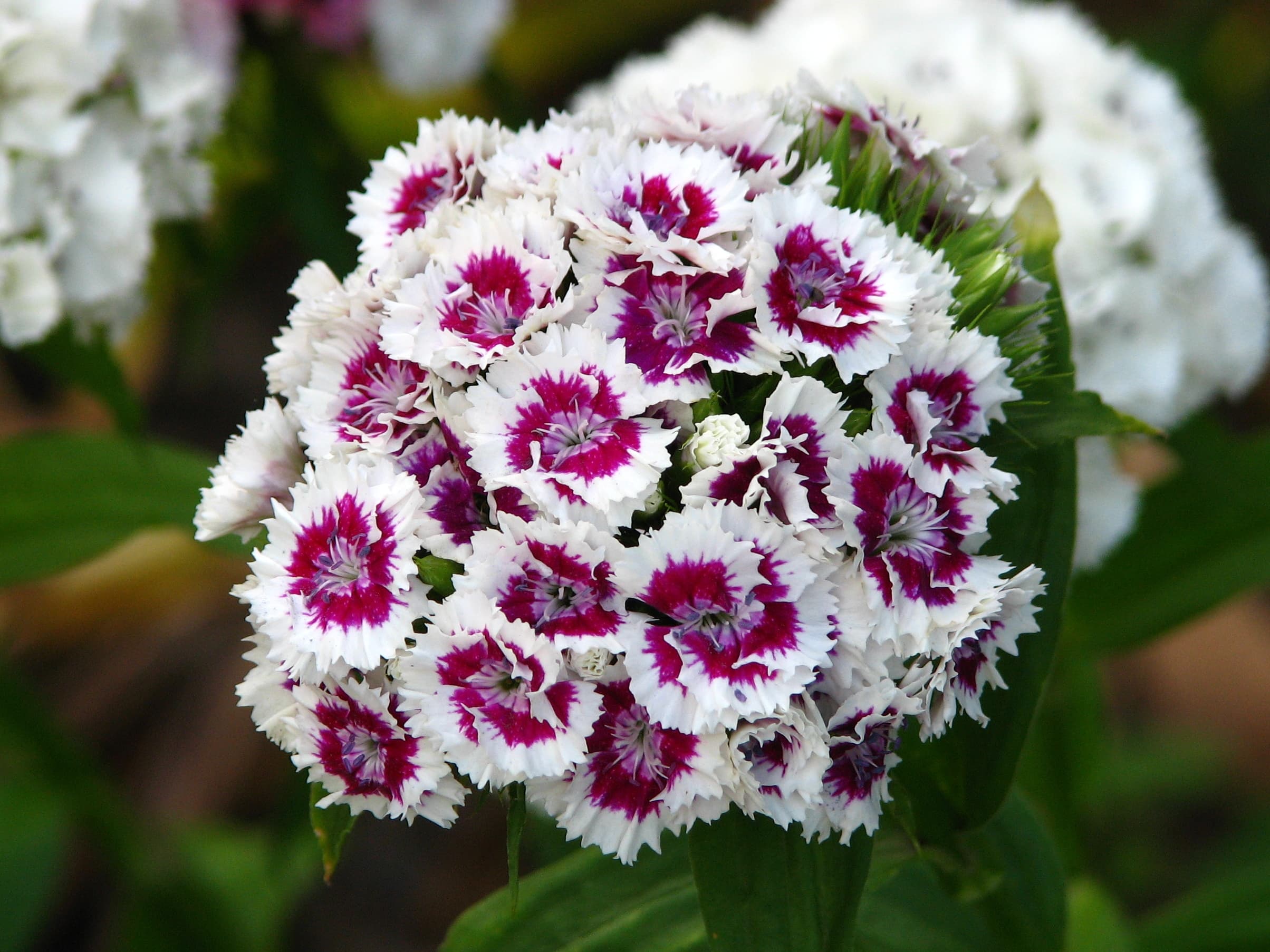
Sweet William
Dianthus barbatus
flowerSweet William is a fragrant, old-fashioned cottage-garden flower, a biennial or short-lived perennial often grown as an annual. It forms sturdy clumps 1 to 2 ft tall topped in spring by rounded, dense clusters of fringed flowers in red, pink, white, and eye-catching bicolors. The blooms are sweetly scented, long-lasting, and excellent for cutting, and they draw bees, butterflies, and moths. As a biennial it typically makes leaves the first year and flowers the second, then often self-sows to carry on.
☀️
Sun
full sun
💧
Water
Every 5 days
🌸
Bloom
~120 days
📊
Difficulty
easy
🌱
Lifecycle
biennial
Leaves year 1, flowers year 2
↔️
Spacing
6-12 in apart
⬇️
Planting Depth
Surface sow seed or set transplants with the crown at the soil line
🧪
Soil pH
6.0-7.5
Growing Details
Soil Type
Loamy, fertile, well-drained
Hardiness Zones
Zones 3 – 9
Grown as an annual. This range is its winter hardiness, but you can grow it for a single season in any zone.
When to Fertilize
Light feeding in spring
Fertilizer
Balanced or compost; low needs
🌱 Growing Guide
Plant sweet William in full sun, or partial shade in hot climates, in fertile, loamy, well-drained soil; it is prone to crown rot in poorly drained ground. It prefers a near-neutral to slightly alkaline soil. Because it is a biennial or short-lived perennial, sow seed in succession or let plants self-seed to keep flowers coming year after year. Deadhead to prolong bloom and tidy the plant, and allow a few heads to set seed if you want volunteers. It tolerates heat and humidity reasonably well and is deer and rabbit resistant.
🌼 Have a different variety?Cultivars of the same species usually share the same basic care, and they differ mainly in flower color, height, and bloom form, not in how you grow them. So this guide still applies even if your exact variety isn't the one shown.
Planting Calendar
Sign in to personalize →🌿
Direct sow
Apr 15
🌸
Projected first bloom
Aug 13
JJan
FFeb
MMar
AApr
MMay
JJun
JJul
AAug
SSep
OOct
NNov
DDec
✅ Plant alongside
Good neighbors that attract beneficial insects or deter pests
- Roses: A classic cottage-garden pairing; sweet William fills the base of rose plantings
- Coneflower: A summer perennial that takes over as sweet William finishes
- Shasta Daisy: Shares sun and well-drained soil and continues the cottage-garden look
🛡️ Pest & disease prevention
Proactive ways to stop trouble before it starts. Tap a name with an arrow for its full guide
🌸 Blooms & cutting
Sweet William is a fine cut flower with good vase life, so harvest stems as the clusters open fully. Deadheading spent clusters prolongs the bloom and keeps plants tidy. To keep this biennial going, let a few flower heads ripen and drop seed, or collect and resow it.
🥗 Nutrition & benefits
Sweet William is an ornamental, not edible. Its value is fragrant, long-lasting spring color, a superb cut flower, and strong appeal to bees, butterflies, and moths, with an easy self-seeding habit. Have a different variety? Cultivars of the same species share the same basic care, so this guide still applies even if your exact color is not shown.
⚠️ Toxicity & safety
Sweet William leaves contain triterpenoid saponins. Eating the plant can cause mild stomach upset, and handling it may cause brief, minor skin irritation in some people. It is considered mildly toxic to cats, dogs, and horses if eaten.
For educational and informational purposes only. HomeSown is not medical, health, or other professional advice. Always positively identify any plant before handling or eating it; some plants, and some parts of otherwise-edible plants, are toxic. Consult a qualified professional before consuming or otherwise using any plant, especially if you are pregnant, nursing, taking medication, or have a health condition.