
Leek Moth
Acrolepiopsis assectella
A small moth whose caterpillars mine and tunnel the leaves of onion-family crops, with leek as the favorite host. The larvae bore toward the center of the plant, leaving windowpane streaks and pinholes that ruin leeks and open onions and garlic to rot.
🔎 How to spot it
The adult is an inconspicuous small brown moth only about a quarter inch long at rest, roughly a half-inch wingspan, with a triangular white mark on the folded wings. The caterpillars are yellow-green, up to about a half inch long, with a pale brown head and small dark spots on each segment. The lacy, netted cocoons, with the green pupa visible inside, are found on the leaves and on nearby debris.
🥀 Damage it causes
Young larvae mine inside the leaves, leaving thin, translucent windowpane patches and longitudinal streaks. On leek they bore toward the center to feed on the inner leaves, leaving rows of pinholes, while on onion and garlic they feed inside the hollow leaves and can bore into the bulbs, opening them to secondary bacterial and fungal rots. The mining renders the crop unmarketable, and damage is worst near field edges.
🛡️ Prevent it
Cover allium crops with floating row cover or insect netting to keep the night-flying moths from laying eggs, which is the single most effective home tactic; the covers can be lifted briefly by day for weeding since the moths fly at night. Rotate crops away from last year alliums, and clean up and destroy crop residue after harvest to remove overwintering moths and pupae. Pheromone traps help time any treatment.
🧯 If it is already here
When larvae are active, the bacterial insecticide Bacillus thuringiensis (Bt) and spinosad applied to young larvae give control, but timing matters because larvae soon tunnel out of reach. The parasitoid wasp Diadromus pulchellus has been introduced as a biological control. Remove and destroy heavily mined plants to reduce the next generation.
💡 Good to know
Native to Europe, leek moth reached North America near Ottawa in the 1990s and was found in the United States in northern New York in 2009, since spreading in the Northeast. It has two to three generations a year, each cycle taking about a month or more, and overwinters as an adult in sheltered spots and crop debris.
🌱 Plants it attacks
26 plants in the library can be attacked by this pest
 Bloomsdale Spinach
 Cipollini Onion
 Common Chives
 Detroit Dark Red Beet
 Egyptian Walking Onion
 Elephant Garlic
 Garlic Chives🧄German Extra Hardy Garlic
 Globemaster Allium
 Honey Locust🧄Inchelium Red Garlic🧄Killarney Red Garlic
 Leek
Leek Music Hardneck Garlic
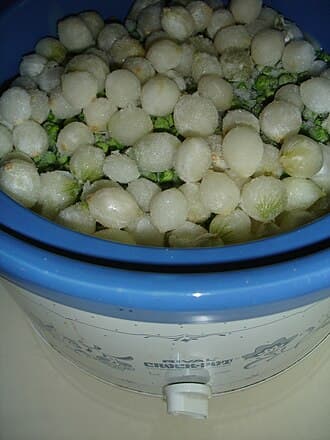 Pearl Onion🧅Red Onion
 Scallion
 Shallot
 Softneck Garlic🧅Spanish Onion🧄Spanish Roja Garlic
 Swiss Chard
 Vidalia Sweet Onion🧅Walla Walla Sweet Onion
 White Onion
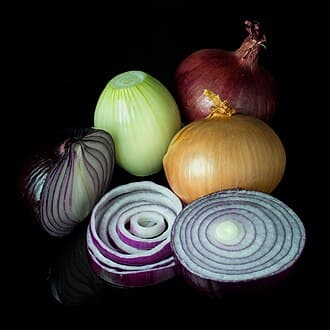 Yellow Sweet Onion
For educational and informational purposes only. Pest control advice is general guidance drawn from university cooperative extension sources; always identify a pest positively and read and follow the label on any product before use, especially around food crops, children, and pets.