Ambrosia Corn
Zea mays 'Ambrosia'
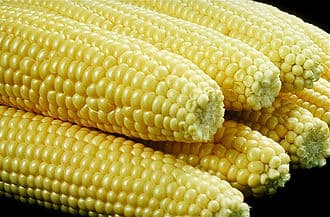
vegetableAmbrosia is a bicolor sugary-enhanced (se) sweet corn that has become a home-garden standard since the 1990s. The se gene gives tender, creamy kernels and a high sugar level that converts to starch more slowly than old-fashioned types, so picked ears stay sweet for several days. Ambrosia produces well-filled 8 in. ears with 16 rows of yellow and white kernels in about 75 days. As an se variety it does not require isolation from standard (su) corn the way supersweets do, which makes it easy to fit into a mixed garden.
☀️
Sun
full sun
💧
Water
Every 4 days
🌾
Harvest
~75 days
📊
Difficulty
medium
🌱
Lifecycle
annual
One season, then done
↔️
Spacing
8-12 in. apart, in blocks
⬇️
Planting Depth
Seed 1-2 in. deep
🧪
Soil pH
6.0-6.8
Growing Details
Soil Type
Rich, well-draining
Hardiness Zones
Zones 4 – 9
Grown as an annual. This range is its winter hardiness, but you can grow it for a single season in any zone.
When to Fertilize
At planting, knee-high, and at tasseling
Fertilizer
High-nitrogen; compost at planting
🌱 Growing Guide
Sweet corn is wind-pollinated, so always plant it in a block of at least 4 short rows rather than one long row - this is the single most important step for full ears. Direct sow Ambrosia 1 to 2 in. deep once soil reaches 60F and frost has passed, spacing seeds 8 to 12 in. apart in rows 30 to 36 in. apart. Corn is a heavy nitrogen feeder: work compost or fertilizer in at planting and side-dress with nitrogen when plants are knee-high (about 12 to 18 in.) and again at tasseling. Keep soil consistently moist, especially during silking and ear fill, and mulch to conserve water.
Planting Calendar
Sign in to personalize →🌿
Direct sow
Apr 29
🌾
Projected first harvest
Jul 13
JJan
FFeb
MMar
AApr
MMay
JJun
JJul
AAug
SSep
OOct
NNov
DDec
✅ Plant alongside
Good neighbors that attract beneficial insects or deter pests
- Beans: Pole beans climb the cornstalks and fix nitrogen for this heavy feeder - the classic Three Sisters pairing
- Squash: Sprawling squash shades the soil, smothers weeds, and keeps roots cool around the corn
- Cucumber: Vining cucumbers use the ground layer and benefit from the corns light shade
- Pumpkin: Like squash, its broad leaves mulch the corn bed and deter raccoons with prickly vines
❌ Keep away from
Tomato
🛡️ Pest & disease prevention
Proactive ways to stop trouble before it starts. Tap a name with an arrow for its full guide
The top sweet-corn pest - apply a few drops of mineral oil (or Bt) to the silk of each ear a few days after silking to smother larvae as they enter the tip
Destroy stalks after harvest where borers overwinter, and apply Bt to whorls early if you see shothole feeding
A two-wire electric fence or a planting of prickly squash around the block is the only reliable defense as ears ripen
They can transmit bacterial wilt; protect seedlings with row cover until established
Scout whorls for ragged feeding and treat with Bt while larvae are small
🌾 Harvest & storage
Ambrosia is ready about 18 to 21 days after the silks first appear, when the silks are brown and dry and the ear feels full and rounded to the tip. Do the thumbnail test: puncture a kernel - the juice should be milky, not clear (too early) or doughy (too late). Pick in the cool morning by twisting the ear down and off, and chill or cook it fast. The se gene holds sweetness longer than old types, but quality is still best within a couple of days.
🥗 Nutrition & benefits
Sweet corn supplies complex carbohydrates and fiber for energy along with B vitamins (especially thiamin and folate), vitamin C, magnesium, and potassium, at about 86 calories per 100 g. The yellow kernels are rich in the carotenoids lutein and zeaxanthin, which support eye health, and bicolor Ambrosia carries these in its yellow kernels. Eaten fresh off the stalk it has more vitamin C than corn that has sat in storage.
For educational and informational purposes only. HomeSown is not medical, health, or other professional advice. Always positively identify any plant before handling or eating it; some plants, and some parts of otherwise-edible plants, are toxic. Consult a qualified professional before consuming or otherwise using any plant, especially if you are pregnant, nursing, taking medication, or have a health condition.