
Bark Beetles
Ips and Dendroctonus species
A group of small beetles whose adults and grubs tunnel and breed in the inner bark of trees, carving galleries that girdle and kill branches or whole trees. They mainly attack conifers such as pine and spruce and tend to overwhelm trees already weakened by drought, injury, or crowding. Some species also carry tree-killing fungi.
🔎 How to spot it
The beetles are tiny, hard, cylindrical, and brown to black, generally between a sixteenth and a quarter inch long; Ips engraver beetles have a scooped-out, spined rear end. They are rarely seen, so trees are diagnosed by their signs: reddish or white pitch tubes on the bark, fine sawdust-like boring dust in bark crevices and at the base, small round exit holes, and distinctive Y-, I-, or H-shaped galleries etched into the wood under the bark.
🥀 Damage it causes
The tunneling severs the layer that carries food and water, so infested trees show fading, yellowing, then reddish-brown crowns, dying branches, and sloughing bark, often from the top or one side first. Heavily attacked trees usually die. Some bark beetles also introduce blue-stain and other fungi that hasten the death of the tree.
🛡️ Prevent it
Healthy, vigorous trees resist attack, so the best prevention is keeping trees unstressed: water during drought, avoid wounding trunks and roots, and thin crowded stands so trees are not competing. Promptly remove and destroy or chip dead and dying wood and fresh logs where beetles breed, and do not pile fresh-cut conifer wood near living trees.
🧯 If it is already here
Once a tree is infested under the bark, sprays cannot reach the beetles and the tree generally cannot be saved, so infested trees should be removed and the wood handled before the next generation emerges. Preventive bark sprays can protect a few high-value trees during an outbreak but must be applied before attack. Overall the control is keeping trees healthy and removing brood wood.
💡 Good to know
Bark beetles are largely secondary pests that finish off trees already stressed, which is why drought years bring outbreaks. Because the beetles are hidden and act fast, the practical signs to watch for are pitch tubes, boring dust, and a crown that suddenly fades. Some, such as elm bark beetles, matter most as carriers of a lethal tree disease.
🌱 Plants it attacks
26 plants in the library can be attacked by this pest
 American Basswood
 Balsam Fir
 Balsam Poplar
 Black Walnut
 Butternut
 Chokecherry
 Eastern White Pine
 English Walnut
 Flowering Dogwood
 Hawthorn
 Honey Locust
 Indian Hawthorn
 Juniper
 Korean Pine
 Paper Birch
 Pinyon Pine
 Quaking Aspen
 Red Alder
 Sassafras
 Shagbark Hickory
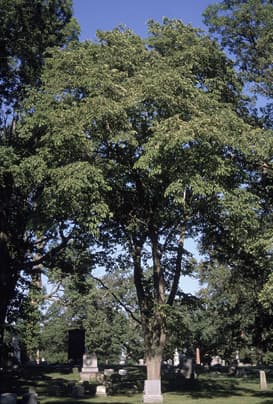 Slippery Elm
 Sugar Maple
 Western Red Cedar
 White Ash
 White Willow
 Witch Hazel
For educational and informational purposes only. Pest control advice is general guidance drawn from university cooperative extension sources; always identify a pest positively and read and follow the label on any product before use, especially around food crops, children, and pets.